

 en
en
 Spanish
 Arabic
 Swahili
 French


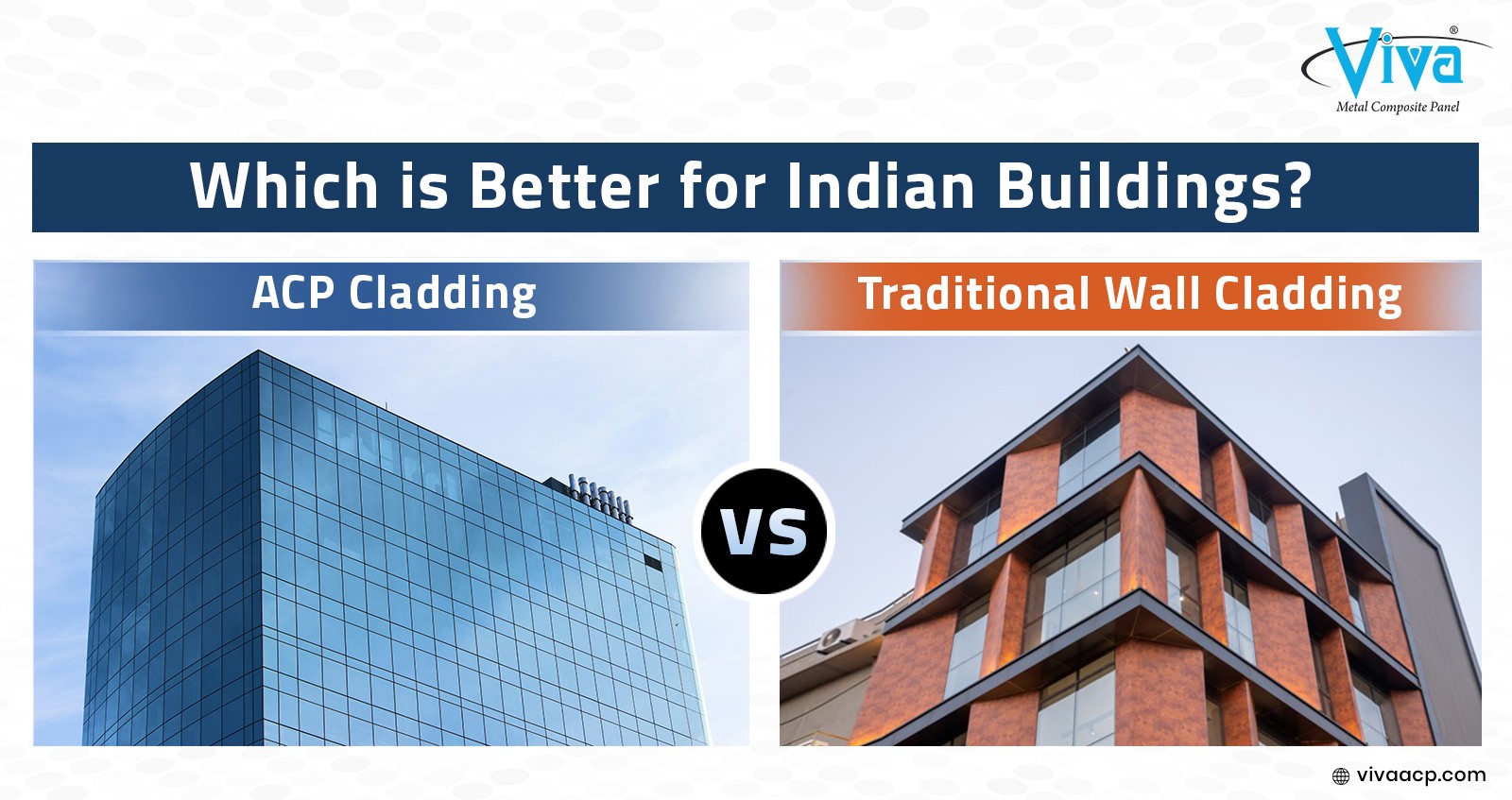
Glass Skin Is Trending - ACP Cladding vs. Traditional Wall Cladding: Which is Better for Indian Buildings?
The "glass skin" aesthetic is taking over India's skylines — from corporate towers in Hyderabad to retail facades in Ahmedabad. But not every building can afford full glass. That's why ACP cladding has emerged as the smart, budget-friendly alternative that delivers the same sleek, polished look. As architects and builders across the country rethink exterior finishes, one debate keeps surfacing: ACP cladding vs. traditional wall cladding — which one truly serves Indian buildings better? Let's break it down comprehensively so you can make an informed decision.
What Is ACP Cladding and Why Is It Gaining Popularity in India?
ACP (Aluminium Composite Panel) cladding refers to flat panels made of two thin aluminium sheets bonded to a non-aluminium core — typically polyethylene or a fire-retardant mineral compound. These panels are installed over a building's structural facade to improve aesthetics, insulation, and weather protection.
The popularity of ACP cladding in India isn't accidental. India's construction market is booming, with rapid urbanisation, smart city projects, and a growing appetite for modern commercial and residential architecture. ACP panels fit perfectly into this landscape — they're lightweight, customisable, low-maintenance, and available in finishes that mimic wood, stone, brushed metal, or high-gloss mirror — the very effect that creates the trending "glass skin" look.
Leading brands and projects from Mumbai to Chennai are now specifying ACP cladding as a primary exterior material. If you're exploring options for your next project, explore our full range of ACP panel solutions designed for Indian climatic conditions.
Traditional Wall Cladding: A Quick Overview
Traditional wall cladding includes materials like:
● Natural stone cladding (granite, marble, sandstone)
● Brick veneer cladding
● Ceramic and vitrified tile cladding
● Cement plaster with paint finishes
These have been the go-to choices for Indian builders for decades — and for good reason. They offer familiarity, local availability, and a sense of permanence that many clients associate with quality construction.
However, as project timelines shrink and design expectations evolve, traditional cladding is beginning to show its limitations — especially in high-rise, commercial, and facade-dominant structures.
ACP Cladding vs. Traditional Wall Cladding: A Detailed Comparison
Weight and Structural Load
One of the most critical factors in Indian high-rise construction is load management. Traditional stone or brick cladding can add significant dead load to a building's structure, requiring heavier RCC frameworks and deeper foundations.
ACP panels, by contrast, weigh between 4–7 kg per square metre — a fraction of stone or ceramic alternatives. This translates to reduced structural costs and faster installation, which is a major advantage in metro cities where project timelines are tightly monitored.
Aesthetic Versatility and the Glass Skin Look
The "glass skin" trend is primarily driven by mirror-finish, silver, and high-gloss ACP panels that reflect light dramatically — giving buildings a futuristic, premium look at a fraction of the cost of actual structural glass or curtain walls.
Traditional cladding materials simply cannot replicate this effect. Stone looks elegant but earthy; tiles can appear dated on large commercial facades. ACP cladding wins hands-down when it comes to:
● Modern design flexibility
● Available in 100+ colour and texture options
● Seamless large-format panel installation
● Custom branding or signage integration
Weather Resistance in Indian Climate Conditions
India presents one of the most demanding climatic challenges for building materials — monsoon humidity, coastal salinity, intense UV radiation, and extreme heat cycles.
Here's how both materials perform:
Parameter ACP Cladding Traditional Cladding
Moisture resistance High Moderate to Low
UV resistance High (PVDF coated) Varies
Thermal expansion Controlled Risk of cracking
Coastal suitability Excellent Poor (stone/tile joints deteriorate)
Cyclone/wind load Engineered for it Dependent on fixing method
ACP panels with PVDF (Polyvinylidene Fluoride) coating are specifically engineered to resist fading, chalking, and corrosion — making them ideal for coastal cities like Mumbai, Kochi, and Visakhapatnam.
Installation Time and Labour Cost
Traditional stone or tile cladding is labour-intensive. It requires skilled masons, curing time, grouting, waterproofing layers, and repeated quality checks. In India's labour market, this increases both cost and project duration.
ACP cladding installs via a dry cladding system — aluminium subframe + panel fixing — which is significantly faster. A team of 4–6 workers can clad 200–300 sq. ft. per day. For large commercial projects, this can save weeks on the overall construction schedule.
Maintenance Requirements
● Traditional cladding: Stone and tiles develop efflorescence, moss, and grout deterioration over time, especially in humid regions. Cleaning requires professional intervention every 2–3 years.
● ACP cladding: Requires simple periodic cleaning with mild detergent. The coated surface doesn't harbour moss or stains easily. Long-term maintenance costs are considerably lower.
Fire Safety Considerations
This is a crucial point for Indian builders. Older ACP panels used PE (polyethylene) cores, which are combustible. However, modern FR (Fire Retardant) and A2-grade ACP panels — now mandatory under several state-level building codes in India — contain mineral-filled cores that significantly limit flame spread.
Always ensure your ACP cladding supplier provides panels compliant with IS 2062 standards and relevant fire safety norms. At Viva ACP, all our panels meet stringent fire safety certifications for commercial and high-rise projects.
Cost Comparison
While upfront material costs for ACP panels can be slightly higher than basic tile or plaster finishes, the total project cost — factoring in structural savings, faster installation, and lower maintenance — generally favours ACP cladding for medium to large projects.
For premium stone cladding, however, ACP offers a clear cost advantage while delivering a comparable or superior visual result.
When Should You Choose Traditional Wall Cladding?
Traditional cladding still makes sense in certain scenarios:
● Heritage or cultural buildings where stone authenticity is architecturally significant
● Low-rise residential projects in rural or semi-urban areas with limited facade complexity
● Projects with existing stone sourcing at highly competitive local rates
● Interiors where natural stone texture is specified by the designer
Why ACP Cladding Is the Future of Indian Building Facades
India's construction industry is evolving rapidly — green buildings, LEED certifications, fast-paced commercial developments, and glass-skin aesthetics are setting new benchmarks. ACP cladding checks every box:
● Lightweight and structurally efficient
● Visually versatile — including the trending glass-skin finish
● Durable in India's harsh and varied climate
● Fast to install, lowering project costs
● Low maintenance over its lifecycle
● Fire-safe options available and compliant
If you're planning a commercial building, IT park, hospital, hotel, or even a premium residential project, ACP cladding deserves serious consideration. Get in touch with our expert team at Viva ACP to discuss the right panel specification for your project.
Conclusion
When comparing ACP cladding vs. traditional wall cladding for Indian buildings, the verdict is clear for most modern projects: ACP cladding offers a superior combination of aesthetics, performance, ease of installation, and long-term value. Whether you're chasing the glass-skin look that's dominating India's architectural landscape or simply want a durable, weather-resistant facade system, ACP panels deliver results that traditional materials struggle to match at scale. As India's cities grow taller and more design-forward, ACP cladding is not just a trend — it's the smart, future-ready choice.
FAQs
Q1. What is ACP cladding and how is it used in Indian buildings?
ACP (Aluminium Composite Panel) cladding is an exterior facade system using lightweight aluminium panels bonded to a core material. It is widely used in commercial, residential, and institutional buildings across India for its modern look, durability, and ease of installation.
Q2. Is ACP cladding fire-safe for high-rise buildings in India?
Yes, when you choose FR-grade or A2-core ACP panels that comply with Indian building codes and IS standards, ACP cladding is considered fire-safe for high-rise applications. Always verify fire certifications with your supplier.
Q3. How does ACP cladding perform in coastal Indian cities like Mumbai or Kochi?
ACP panels with PVDF coating offer excellent resistance to salt air corrosion, humidity, and UV radiation — making them highly suitable for coastal cities in India. They outperform traditional stone or tile cladding in such environments.
Q4. What is the difference between ACP cladding and traditional stone cladding in terms of cost?
While initial material costs can vary, ACP cladding typically results in lower total project costs due to structural weight savings, faster installation, and reduced long-term maintenance compared to natural stone cladding.
Q5. Can ACP cladding achieve the glass skin look for Indian commercial buildings?
Absolutely. High-gloss, mirror-finish, and metallic ACP panels are specifically designed to replicate the glass skin aesthetic — offering a sleek, reflective facade at a much lower cost than structural glass or curtain wall systems.
POPULAR POSTS
CATEGORIES
- Aluminium Compsoite panel 52
- ACP Sheet 170
- ACP Facade 9
- Copper Aluminium Sheet 1
- Fire Safety For Buildings 3
- ACP Cladding 14
- Colour Coated Aluminium Coil 2
- Aluminium Corrugated Composite Panel 1
- Facades 7
- Aluminium Honeycomb Panel 6
- Fire Retardant 8
- Zinc Composite Panel 4
- Corten Steel Series 1
- Metal Abstract Series 3
- Wooden ACP Sheet 1
- HPL Sheet 3
- Viva ACP Colour Coating 1
- Wall Cladding 2
- Applications of ACP Panel 1
- Viva ACP 14
- ACP Sheets for Architectural Projects 3
- PVDF vs Polyester 3
- ACP Sheets For Showroom 1
- Viva ACP on International Market 1
- Viva royal club app 1
- ACP Sheets for Branding Corporates 1
- Shades of Santa Fe 1
- Al Zinc Series 1
- ACP Sheet Sizes and Thicknesses 1
- Louvers and Baffles 1
- Sustainable Facades 1