



 en
en
 Spanish
 Arabic
 Swahili
 French


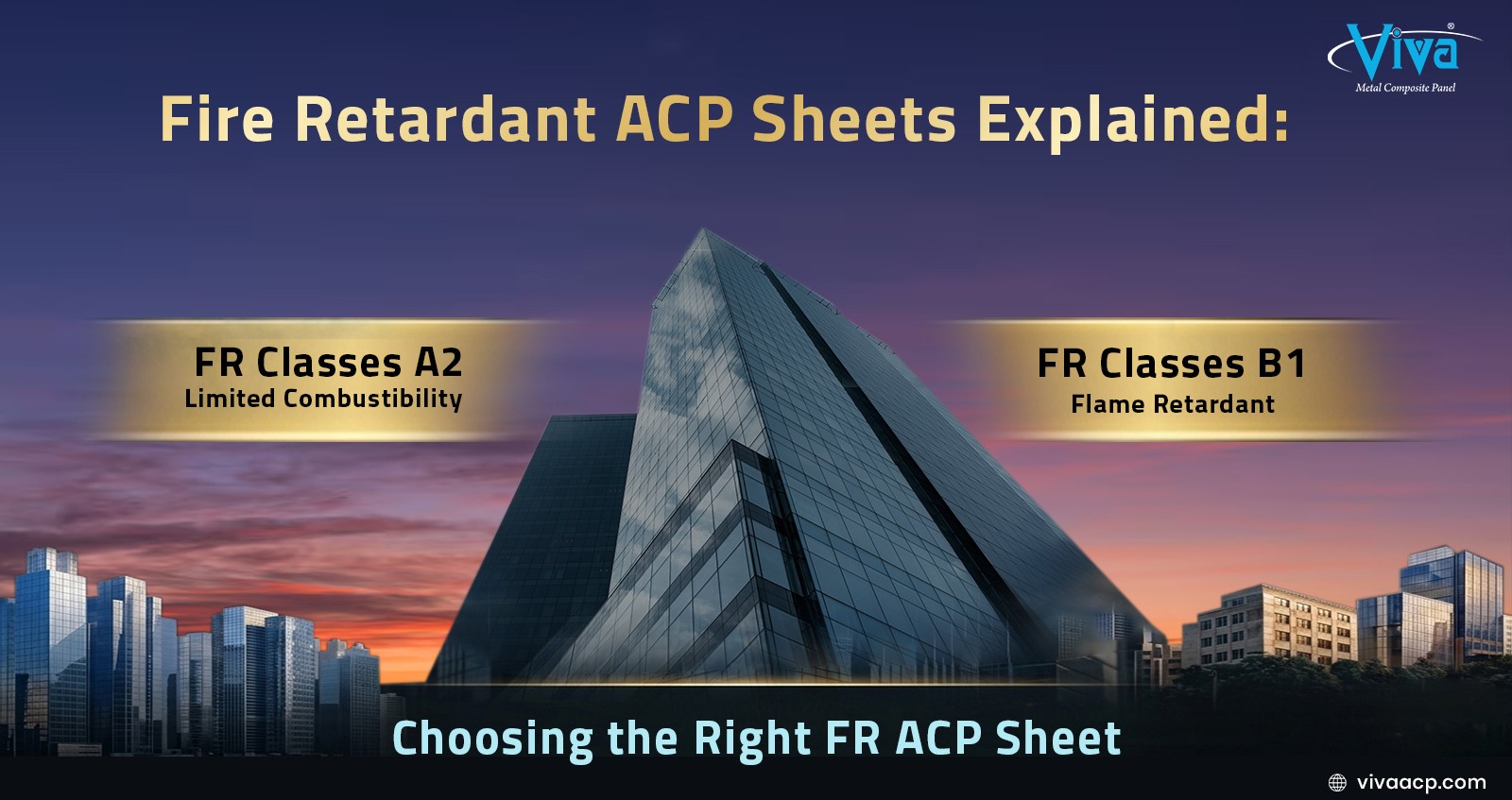
Fire Retardant ACP Sheets Explained: FR Classes A2, B1 & Why They Matter for Building Safety
When it comes to modern building facades, fire retardant ACP sheets are no longer optional - they are a critical safety standard. As high-rise construction continues to grow across Indian cities, understanding the fire resistance classifications of Aluminium Composite Panels (ACP) has become essential for architects, builders, and project owners alike. Whether you're designing a commercial tower, a hospital facade, or a retail storefront, knowing the difference between FR Class A2 and B1 can determine not only regulatory compliance but the safety of every person inside the building.
What Are Fire Retardant ACP Sheets?
Fire retardant ACP sheets are aluminium composite panels engineered with a specially formulated core that resists ignition and limits the spread of flame. Unlike standard ACP sheets that use a polyethylene (PE) core — which is highly combustible — FR-grade panels use a mineral-filled or non-combustible core that significantly reduces fire risk.
The core composition is the key differentiator. FR cores typically contain mineral hydroxides, calcium carbonate, or other inorganic fillers that absorb heat and slow combustion. When exposed to fire, instead of fuelling the flames, the core releases moisture vapour that suppresses heat transfer.
This makes fire retardant ACP sheets the preferred choice for:
● High-rise residential and commercial buildings
● Hospitals, schools, and public infrastructure
● Airports, metro stations, and transit hubs
● Buildings where fire safety regulations mandate non-combustible cladding
Understanding FR Classification: What Do A2 and B1 Mean?
The European EN 13501-1 Fire Classification Standard
Most fire retardant ACP sheets sold in India and globally are tested and rated under the European standard EN 13501-1, which classifies building materials based on their reaction to fire. The classes range from A1 (non-combustible) to F (no performance determined).
For ACP sheets, the two most commercially relevant and safety-critical classes are A2 and B1.
FR Class A2 — Limited Combustibility
Class A2 is the highest fire rating achievable for ACP panels with a composite structure. Panels in this category are classified as having limited combustibility — meaning they do not contribute significantly to fire in terms of heat release, flame spread, or smoke production.
Key characteristics of A2-rated FR ACP sheets:
● Very low contribution to fire growth
● Minimal smoke emission and burning droplets
● Core is primarily mineral-based (typically 70% or more inorganic filler)
● Ideal for buildings above 15 metres in height
● Meets the most stringent fire safety codes in Europe, the Middle East, and increasingly in India
A2-rated panels are mandatory in many Gulf Cooperation Council (GCC) countries and are rapidly being adopted as the benchmark standard for facade cladding in India's urban infrastructure projects. If your project involves a government building, hospital, or high-rise above 6 floors, specifying A2-rated fire retardant ACP is the safest and most compliant choice.
FR Class B1 — Flame Retardant (Difficultly Flammable)
Class B1 corresponds to panels that are difficultly flammable, also described as self-extinguishing. These panels will resist ignition under normal exposure but may contribute slightly to fire under extreme heat conditions.
Key characteristics of B1-rated FR ACP sheets:
● Resists flame spread under standard fire test conditions
● Self-extinguishing — the panel stops burning when the flame source is removed
● Suitable for low-to-mid-rise buildings (typically up to 6 storeys)
● More economical than A2-rated panels while still offering fire resistance above standard PE-core panels
● Widely used in interior cladding, shopfronts, signage panels, and lower-risk facade applications
B1 panels strike a balance between cost-effectiveness and fire safety, making them a popular choice for residential projects, retail interiors, and light commercial buildings where A2-level protection is not mandated.
A2 vs B1 FR ACP Sheets: A Quick Comparison
Feature FR Class A2 FR Class B1
Combustibility Limited combustibility Difficultly flammable
Core Type Mineral-filled (70%+ inorganic) Mineral-filled (partial)
Flame Spread Negligible Low
Smoke Emission Very low Low-moderate
Best For High-rise, hospitals, airports Low-mid rise, interiors
Regulatory Compliance Highest standard Moderate standard
Cost Premium Cost-effective
Why FR Classification Matters for Building Safety
The Grenfell Tower Effect on Global Standards
The 2017 Grenfell Tower fire in London, which claimed 72 lives, was largely attributed to the use of combustible PE-core ACP cladding on the building's exterior. This tragedy triggered a global reassessment of facade material standards and accelerated the push for A2-rated fire retardant ACP sheets as the mandatory minimum for high-rise buildings worldwide.
In India, the National Building Code (NBC) 2016 and Bureau of Indian Standards (BIS) guidelines have been progressively updated to address cladding fire safety. Specifying the correct FR class is now a non-negotiable aspect of responsible architectural practice.
Fire Safety Is About More Than Compliance
Beyond regulatory requirements, choosing the right fire retardant ACP sheet is about protecting:
● Occupant lives — slower flame spread gives people more time to evacuate
● Structural integrity — reduced heat transfer protects the building's framework
● Property value — fire-damaged buildings face massive remediation costs
● Liability protection — builders and specifiers using non-compliant materials face legal exposure
Explore our range of FR-rated ACP sheets at Viva ACP designed to meet A2 and B1 standards for every project type.
How to Choose the Right FR ACP Sheet for Your Project
Step 1 — Determine Your Building Type and Height
● Above 15 metres or 6 storeys → Specify A2-rated FR ACP minimum
● Below 15 metres, interior cladding, or signage → B1-rated FR ACP is generally acceptable
Step 2 — Check Local Fire Safety Codes
Different states and municipalities in India may have specific fire NOC (No Objection Certificate) requirements. Always verify with your local fire department and architect.
Step 3 — Verify Third-Party Test Certifications
Always request the EN 13501-1 fire test certificate from your ACP supplier. Reputable manufacturers will provide third-party lab-certified documentation. Be cautious of panels marketed as "FR grade" without verifiable test reports.
Step 4 — Consider the Full System
Fire performance of a cladding system depends not just on the panel but on:
● The insulation material behind the panel
● Cavity ventilation design
● Fire barriers and cavity stops at each floor level
● Fixing system and sub-frame material
Conclusion
Choosing the right fire retardant ACP sheets is one of the most consequential decisions in any facade specification. FR Class A2 and B1 are not just labels — they represent measurable, tested levels of fire performance that directly impact building safety, regulatory compliance, and the lives of occupants. As India's built environment scales upward and safety codes continue to evolve, specifying certified FR-grade ACP panels is both a professional responsibility and a smart investment. Whether you need A2-grade protection for a high-rise or B1-rated panels for a commercial fit-out, ensure your supplier provides full certification and transparent test data.
Frequently Asked Questions (FAQs)
Q1. What is the difference between FR ACP and PE ACP sheets?
FR (Fire Retardant) ACP sheets use a mineral-filled core that resists ignition and limits flame spread, while PE (Polyethylene) core ACP sheets are highly combustible and are no longer recommended for exterior cladding on buildings above ground-floor level.
Q2. Is A2-rated fire retardant ACP mandatory in India?
While India's National Building Code recommends non-combustible cladding for high-rise buildings, enforcement varies by state. Many metro municipalities and government projects now mandate A2-rated fire retardant ACP sheets for facades above a certain height.
Q3. Can B1-rated ACP sheets be used on high-rise buildings?
B1-rated panels are generally suitable for buildings up to 6 storeys or for interior applications. For buildings above 15 metres, A2-rated fire retardant ACP is strongly recommended and often required by fire safety authorities.
Q4. How can I verify the FR rating of an ACP sheet?
Ask your supplier for the EN 13501-1 fire classification certificate issued by an accredited third-party testing laboratory. Genuine FR-rated panels will have documented test reports with specific class designations.
Q5. Do fire retardant ACP sheets cost significantly more than standard panels?
A2-rated panels carry a premium over standard PE-core panels due to the higher mineral content in the core. However, B1-rated FR panels are only marginally more expensive than PE panels and offer substantial fire safety improvement — making them a cost-effective upgrade for most projects.
POPULAR POSTS

CATEGORIES
- Aluminium Compsoite panel 52
- ACP Sheet 170
- ACP Facade 9
- Copper Aluminium Sheet 1
- Fire Safety For Buildings 3
- ACP Cladding 14
- Colour Coated Aluminium Coil 2
- Aluminium Corrugated Composite Panel 1
- Facades 7
- Aluminium Honeycomb Panel 6
- Fire Retardant 8
- Zinc Composite Panel 4
- Corten Steel Series 1
- Metal Abstract Series 3
- Wooden ACP Sheet 1
- HPL Sheet 3
- Viva ACP Colour Coating 1
- Wall Cladding 2
- Applications of ACP Panel 1
- Viva ACP 14
- ACP Sheets for Architectural Projects 3
- PVDF vs Polyester 3
- ACP Sheets For Showroom 1
- Viva ACP on International Market 1
- Viva royal club app 1
- ACP Sheets for Branding Corporates 1
- Shades of Santa Fe 1
- Al Zinc Series 1
- ACP Sheet Sizes and Thicknesses 1
- Louvers and Baffles 1
- Sustainable Facades 1