en
 Spanish
 Arabic
 Swahili
 French


|
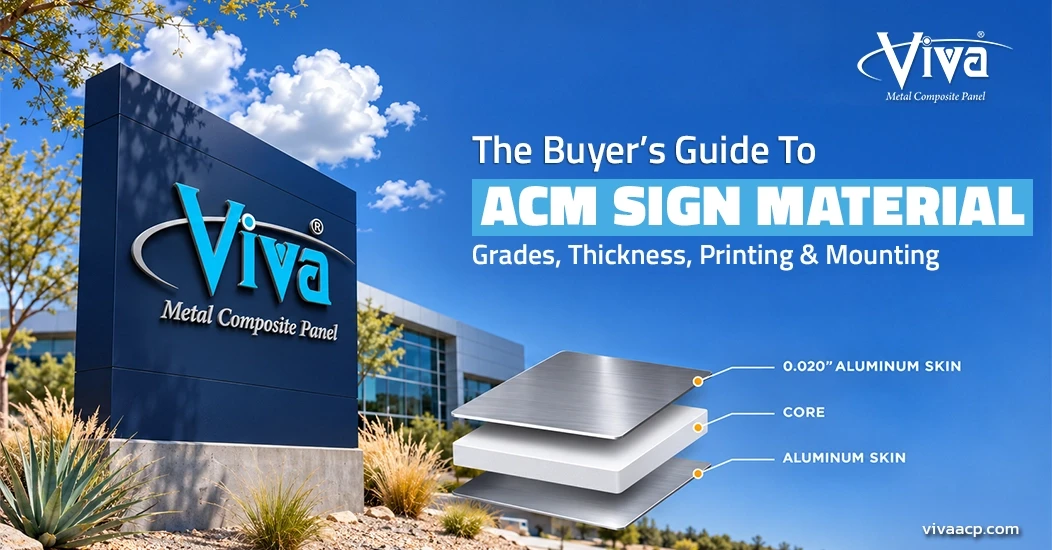
Quick answer ACM sign material is a rigid sheet made of two thin aluminum skins bonded to a polyethylene core, usually 3 mm thick. It is light, flat, weather resistant and easy to print, cut and mount, which is why it is one of the most used substrates for outdoor signs in the US. For short-term or indoor signs, a thin sign-grade skin is fine. For long-life outdoor and building-mounted signs, choose thicker 0.020 inch skins and a PVDF finish. |
Walk through any US sign shop and you will find stacks of white aluminum composite sheets. ACM has replaced painted plywood, aluminum plate and plastic for a huge share of everyday signage, from real estate panels and parking signs to wayfinding and monument faces.
Not all ACM is the same, though. A sheet that is perfect for a six-month construction sign can disappoint on a ten-year building sign. This guide explains what ACM sign material is, how to pick the right grade and thickness, and the printing, fabrication and mounting details that make signs last.
What is ACM sign material?
ACM stands for aluminum composite material. A sheet has three layers: a thin aluminum skin on each face and a solid core in the middle, usually polyethylene. The skins are pre-painted, most often in white, and the result is a panel that is stiff, flat and far lighter than solid aluminum of the same rigidity.
In the sign trade, ACM is often called by brand names, the same way people say a brand name for any common product. Whatever the label, the material is the same basic construction. For architectural use on buildings, the same family of products is sold as aluminum composite panels , with thicker skins and higher-performance coatings.
• Lightweight: a 3 mm sheet weighs roughly 0.75 to 0.8 lb per square foot, depending on skin thickness.
• Rigid and flat: it does not warp like plywood or bow like thin plastic.
• Weather resistant: the aluminum skins do not rot, rust or swell.
• Easy to work: it cuts, routes, drills and bends with standard sign shop tools.
• Print-ready: smooth painted faces take UV ink and vinyl well.
Sign-grade vs architectural ACM
This is the most important choice a sign buyer makes, and it is often overlooked.
|
Feature |
Sign-grade ACM |
Architectural ACM |
|
Typical total thickness |
3 mm |
4 mm (3 mm and 6 mm also used) |
|
Aluminum skin thickness |
About 0.006 to 0.012 inch |
About 0.020 inch (0.5 mm) |
|
Coating |
Polyester, usually white |
PVDF in many colors and finishes |
|
Core |
Polyethylene |
Polyethylene, fire-retardant or A2 mineral core |
|
Typical outdoor life |
Short to medium term |
Long term, often backed by finish warranties of 20 years or more |
|
Best for |
Real estate, site, event and indoor signs |
Building-mounted signs, fascias, monument signs, branded facades |
A simple rule: if the sign needs to look good for more than a few years outdoors, or it is fixed to a building, step up to architectural-grade sheet. Thin skins dent more easily, and polyester coatings fade and chalk faster in strong sun.
Which thickness should you use?
|
Thickness |
Common uses |
Notes |
|
2 mm |
Small indoor signs, displays, POP |
Light and cheap, but flexes on larger sizes |
|
3 mm |
Most outdoor signs, real estate, parking, wayfinding |
The industry standard for flat signs |
|
4 mm |
Large flat signs, building signage, routed and folded pan signs |
Stiffer and flatter over wide spans |
|
6 mm |
Very large panels, monument faces, high-wind sites |
Maximum stiffness, heavier and costlier |
Standard sheet sizes in the US are 4x8 feet and 4x10 feet, with 5x10 feet also common. Viva's ACP sizes and thickness guide lists the widths and lengths available for larger projects.
Printing on ACM
ACM is one of the easiest substrates to print, which is a big reason for its popularity.
• Direct UV printing: flatbed UV printers print straight onto the painted face. Clean the surface with isopropyl alcohol first and check ink adhesion on a test piece.
• Printed vinyl: a printed and laminated vinyl applied to the sheet. Good for long outdoor life, since the laminate adds UV and scratch protection.
• Cut vinyl lettering: simple, durable and quick for text and logos.
• Screen printing: still used for long runs of identical signs.
For outdoor signs, add a UV-resistant laminate or clear coat over direct prints. Without it, colors fade faster in high-sun states such as Arizona, Texas, Nevada and Florida.
Cutting, routing and bending
ACM works with tools most sign shops already own.
• Panel saw or table saw: use a carbide-tipped blade designed for non-ferrous metals and plastics.
• CNC router: ideal for shapes, cut-out letters and V-groove routing.
• Route and fold: a V-shaped groove routed on the back face lets you fold the sheet into a tray or pan sign with crisp edges.
• Drilling: standard metal or wood bits work; drill slightly oversized holes to allow for thermal movement.
• Edge finishing: a light deburr gives a clean edge. For premium signs, cap or color the edges.
Leave the protective film on during fabrication to avoid scratches, then remove it soon after installation. Film left on for months in the sun can bond to the paint.
Mounting ACM signs
|
Method |
Best for |
Tips |
|
Posts with brackets or channels |
Real estate, parking and site signs |
Use stainless or galvanized hardware |
|
Standoffs |
Lobby, office and wayfinding signs |
Drill oversized holes so the panel can move |
|
VHB tape and adhesive |
Flat walls and smooth surfaces |
Clean and prime both surfaces; follow the tape maker's rules |
|
Rivets or screws on a frame |
Building signs and large panels |
Fix one point, let others float in slotted holes |
|
Pan or tray with hidden fixings |
Premium building and monument signs |
Route and fold the edges, then hang on clips |
Aluminum expands and contracts with temperature. A 10 foot sign can move by around 1/8 inch or more between a cold winter night and a hot summer afternoon. Leave small gaps at edges and avoid locking large panels rigidly on all four sides.
Indoor vs outdoor: choosing the right grade
|
Sign type |
Recommended sheet |
Finish |
|
Indoor wayfinding and displays |
2 mm or 3 mm sign grade |
Polyester |
|
Real estate and construction signs |
3 mm sign grade |
Polyester with laminated print |
|
Parking and traffic-style signs |
3 mm sign grade or architectural |
Polyester or PVDF |
|
Building-mounted and fascia signs |
4 mm architectural |
PVDF |
|
Monument sign faces |
4 mm or 6 mm architectural |
PVDF |
Colors and finishes beyond white
White gloss and matte are the workhorses of the sign trade, but ACM comes in far more finishes, and they can save a lot of printing.
• Solid colors: black, red, blue and brand colors give a clean background for cut vinyl or routed letters.
• Brushed and mirror metallics: brushed silver, gold and copper look premium for lobby and office signs.
• Wood and stone looks: popular for hospitality, restaurants and upscale retail.
• Custom brand colors: for chains with many locations, a factory-matched color is more consistent than printing the same shade again and again.
Matte faces reduce glare under lights and outdoors, which helps readability. Gloss faces make colors pop but show scratches and fingerprints more.
Cleaning and caring for ACM signs
ACM signs need very little care. Wash them with water and a mild detergent a few times a year, using a soft sponge or cloth. Avoid abrasive pads, strong solvents and pressure washers held close to the face, which can damage prints and laminates. Check fixings and posts once a year, especially in coastal and snowy regions where salt can attack plain steel hardware.
Recycling and sustainability
Aluminum is one of the most recycled materials in the world, and the skins of an ACM sheet can be recovered at end of life. Lighter signs also mean lighter shipping and smaller structural supports. If your client tracks sustainability, ask the supplier for recycled content figures and an Environmental Product Declaration.
Codes and building-mounted signs
Most freestanding and short-term signs only need to meet local sign ordinances on size, height and placement. Signs fixed to buildings can fall under local building and fire rules too, especially on taller buildings or large fascias. If a sign becomes part of the exterior wall, the same fire questions that apply to ACM cladding may apply. Viva's page on fire-retardant ACP explains the core options in more detail.
Common mistakes with ACM signs
• Using thin sign-grade sheet on a sign meant to last many years outdoors.
• Skipping the UV laminate on direct prints in high-sun regions.
• Drilling holes the same size as the fastener, so the panel buckles in summer.
• Leaving protective film on too long after installation.
• Using plain steel screws that rust and stain the face.
How to buy ACM sign material
When you request a quote, specify the total thickness, skin thickness, core, coating, color and sheet size. Ask whether the face is print-ready and what warranty covers the finish. For larger projects, ask about custom colors to match a brand, which is common for retail chains and corporate campuses.
Why Viva
Viva, which describes itself as Asia's largest ACP manufacturer, produces more than 15 million square meters of composite panels a year across more than 15 production lines, with 5 color coating lines and more than 250 in-house quality tests. That scale supports both standard white sign stock and custom brand colors in architectural grades, with PVDF finishes and product-specific warranties.
Frequently asked questions
What is ACM sign material?
ACM sign material is a rigid panel made of two thin aluminum skins bonded to a polyethylene core, usually 3 mm thick. It is light, flat and weather resistant, and it can be printed, cut, routed and mounted easily, which makes it one of the most popular outdoor sign substrates.
What thickness of ACM is best for signs?
3 mm is the standard for most flat outdoor signs. Use 2 mm for small indoor signs and 4 mm or 6 mm for large panels, building signs and monument faces that need to stay flat over wide spans or in windy locations.
How long do ACM signs last outdoors?
It depends on the grade. Sign-grade ACM with a polyester finish suits short and medium-term signs. Architectural ACM with thicker skins and a PVDF finish can look good for many years and often carries finish warranties of 20 years or more.
Can you print directly on ACM?
Yes. ACM works well with direct UV flatbed printing. Clean the face with isopropyl alcohol first, test ink adhesion, and add a UV laminate or clear coat for outdoor signs so colors do not fade quickly in strong sun.
How do you cut ACM sheets?
Use a panel saw or table saw with a carbide-tipped blade made for non-ferrous metals and plastics, or a CNC router for shapes and letters. Keep the protective film on while cutting to avoid scratches, and deburr the edges afterward.
What is the difference between ACM and aluminum sheet for signs?
ACM is a composite of two thin aluminum skins and a plastic core, so it is stiffer and flatter than a solid aluminum sheet of the same weight and usually cheaper for large signs. Solid aluminum sheet is used where a thin, fully metal sign is needed, such as traffic signs to government specifications.
Sourcing ACM for signs or a brand rollout? Send your sheet size, thickness, color and quantity through the quote request form and the Viva team will recommend the right grade and finish for your project.
POPULAR POSTS
-
ACM Sign Material: A Practical Buyer's Guide for Sign Makers and Sign Buyers
2026 Nov 24
-
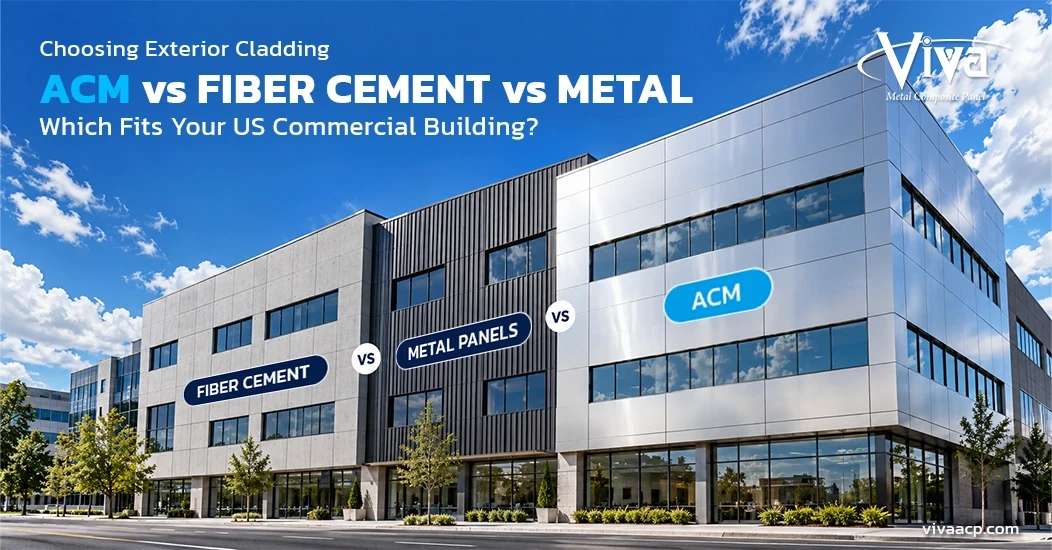 ACM Panels vs Fiber Cement vs Metal Wall Panels: Choosing Exterior Cladding for US Commercial Buildings
2026 Nov 16
-
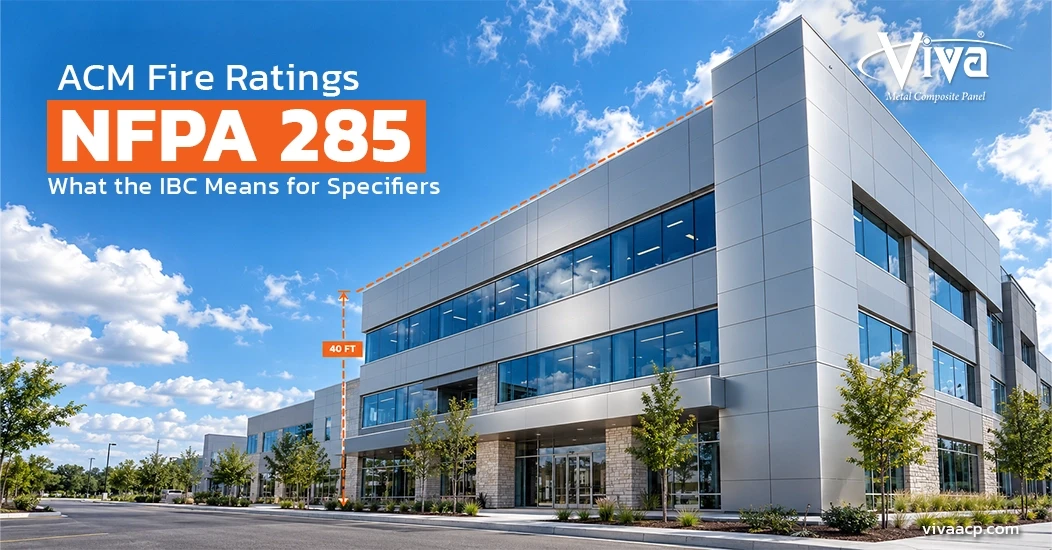 Aluminum Composite Material Fire Ratings: What the IBC and NFPA 285 Mean for Specifiers
2026 Nov 14
CATEGORIES
- Aluminium Compsoite panel 3
- ACP Sheet 0
- ACP Facade 0
- Copper Aluminium Sheet 0
- Fire Safety For Buildings 0
- ACP Cladding 0
- Colour Coated Aluminium Coil 0
- Aluminium Corrugated Composite Panel 0
- Facades 0
- Aluminium Honeycomb Panel 0
- Fire Retardant 1
- Zinc Composite Panel 0
- Corten Steel Series 0
- Metal Abstract Series 0
- Wooden ACP Sheet 0
- HPL Sheet 0
- Viva ACP Colour Coating 0
- Wall Cladding 0
- Applications of ACP Panel 0
- Viva ACP 0
- ACP Sheets for Architectural Projects 0
- PVDF vs Polyester 0
- ACP Sheets For Showroom 0
- Viva ACP on International Market 0
- Viva royal club app 0
- ACP Sheets for Branding Corporates 0
- Shades of Santa Fe 0
- Al Zinc Series 0
- ACP Sheet Sizes and Thicknesses 0
- Louvers and Baffles 0
- Sustainable Facades 0
- Aluminium composite material 1
ARCHIVES
Explore the ranges
Published by VIVA - Asia's Largest Manufacturer of Aluminium Composite Panels. 15M sq.mt capacity | 500+ shades | Thomas Bell-Wright FR A2+ Certified