


 en
en
 Spanish
 Arabic
 Swahili
 French


Choosing an ACP sheet often looks simple on paper. You pick a colour, decide a finish, check the price, and move ahead. But in reality, the performance of an aluminium composite panel depends on much more than how it looks on the elevation.
We’ve seen this first-hand at VIVA. We work closely with architects, fabricators, and project teams across different types of construction requirements. When ACP specifications are not understood properly at the start, problems show up later. Panels bend where they shouldn’t, surfaces lose their finish too soon, or safety checks are not done as per the requirements.
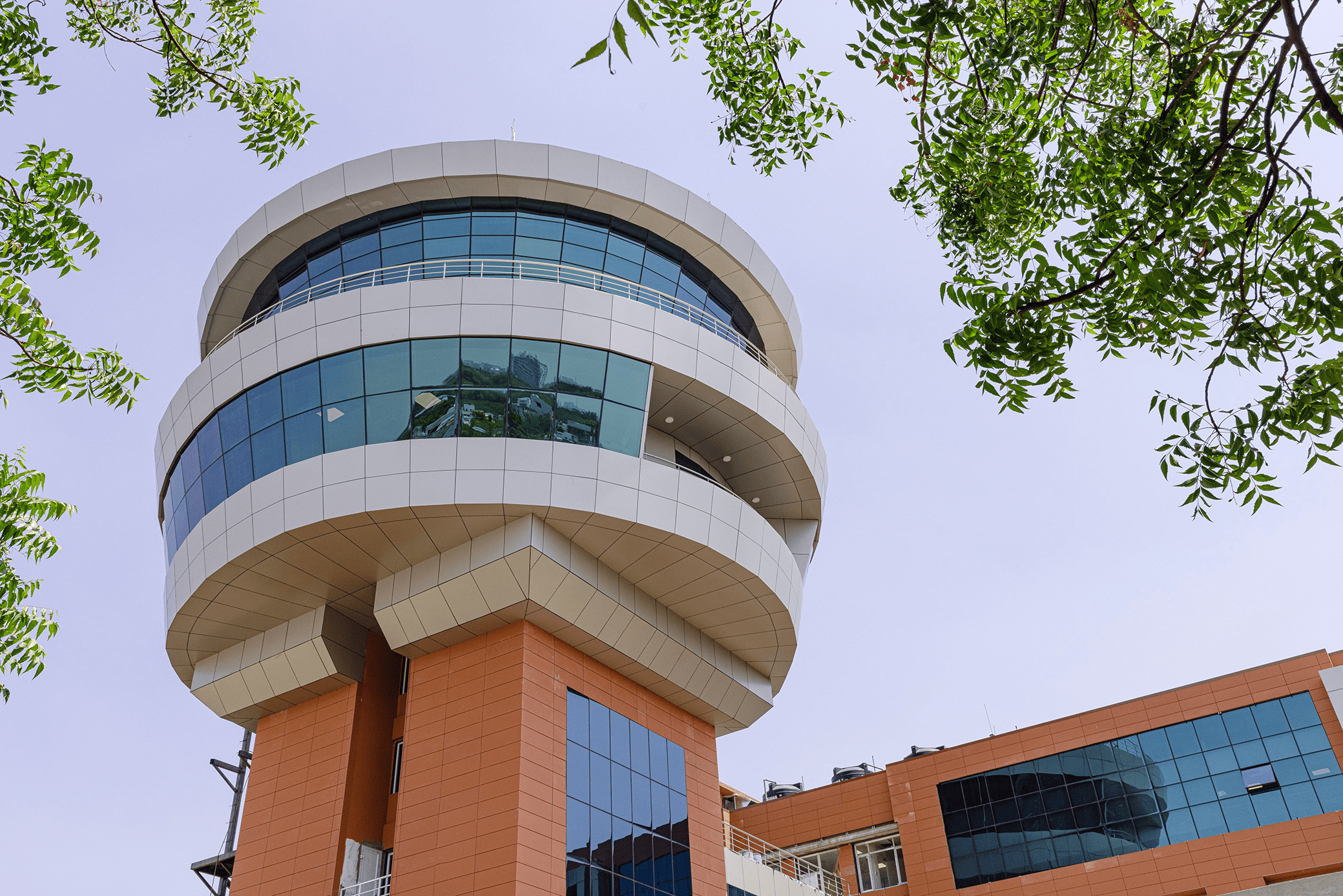
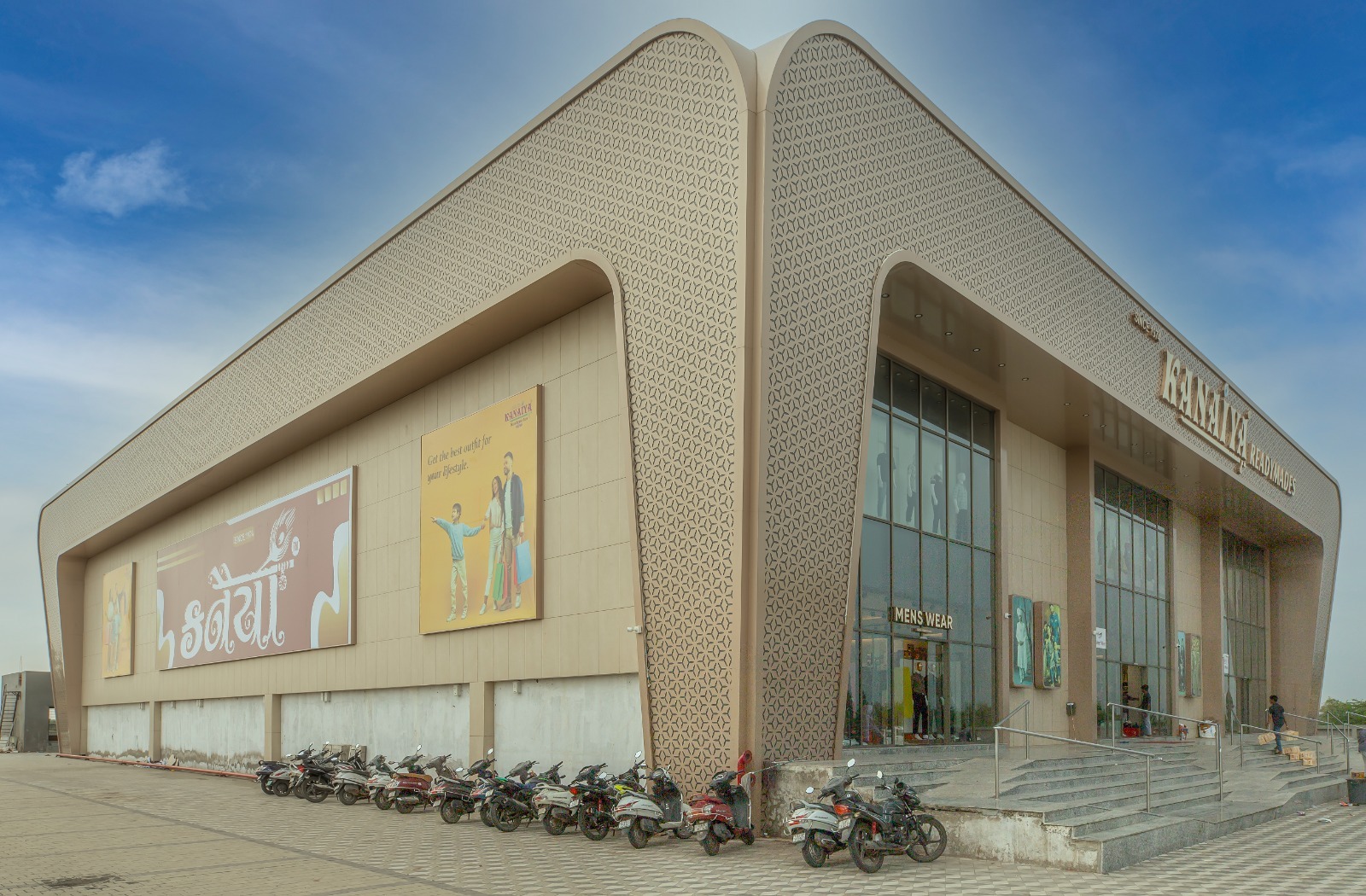
In modern commercial building elevation design, ACP sheets are expected to perform under constant exposure. They must remain stable, resist dust and pollution, comply with fire norms, and still maintain a clean, professional look year after year. This is where informed selection makes all the difference.
In this blog, we will share insights on what specifications you should check before buying ACP sheets.
What Are Aluminum Composite Panels?
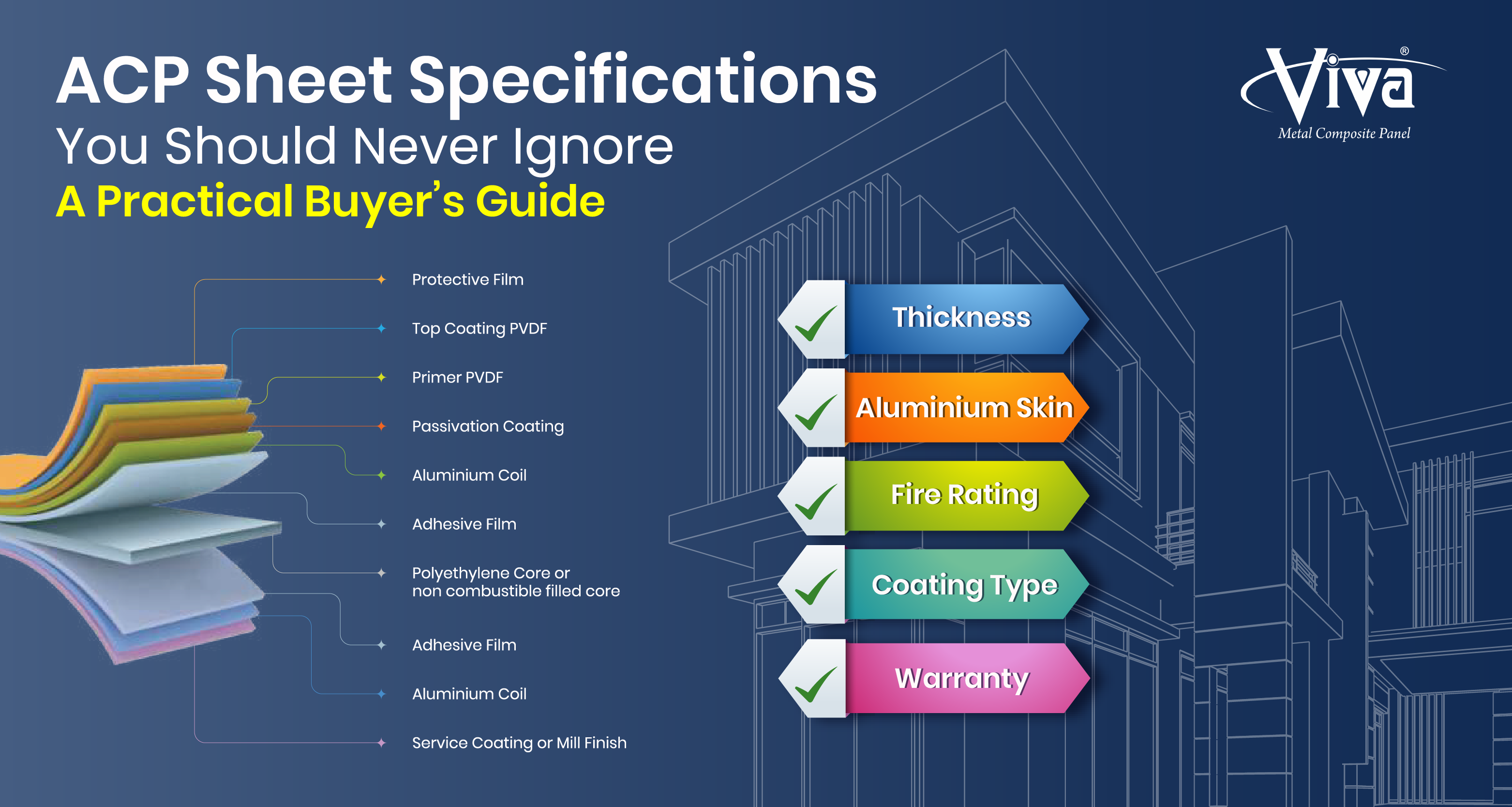
An aluminium composite panel is a factory-bonded cladding material which is made of two aluminium skins fixed on either side of a core layer. This sandwich-type construction gives ACP sheets a high strength-to-weight ratio, good flexural rigidity, and a consistently flat surface suitable for architectural applications.
The outer aluminium layers provide corrosion resistance, protection against weather exposure, and long-term surface stability. Moreover, the core material, which may be LDPE, mineral-filled, or aluminium-based, has a big role in the panel’s stiffness, fire performance, and overall structural behaviour.
ACP sheets are widely used in:
●External Facades
●Signage
●Interior Wall Cladding
In commercial building elevation design, they are preferred because they support larger panel sizes, deliver uniform joint lines, and maintain consistent surface finishes which automatically keeps the dead load on the structure low.
ACP Sheet Specifications You Should Always Evaluate Before Buying
Before buying an ACP sheet, it’s important to understand a few basic things that affect quality. These details may seem small, but they decide how the panel performs right from the time of installation.
1. Panel Thickness and Sheet Size
Thickness is the first thing we discuss with our clients. ACP sheets are commonly available in 3mm, 4mm, and 6mm thicknesses, and each serves a different purpose.
Thinner sheets work well for interiors and signage where there is very little load or wind pressure. For exterior facades, especially in commercial buildings, 4mm and 6mm panels perform better because they stay more stable and resist movement. When thickness is chosen without thinking about building height or fixing method, panels can start vibrating or bending over time.
The sheet size also plays a big role. Larger panels reduce joint lines and enhance visual continuity, but they require proper support and installation planning. Smaller panels are easier to handle but they increase visible joints. At VIVA ACP, we guide our clients to help balance aesthetics, structural stability, and on-site practicality when selecting sizes.
2. Core Material
The core is the most important part of an ACP sheet, even though it’s not visible from the outside. It controls how the panel reacts to heat, pressure, and fire, and has a major impact on overall performance.
At VIVA, we offer LDPE (Low-Density Polyethylene) core panels that are lightweight and flexible. These panels are easy to fabricate and are suitable for many interior and exterior applications where fire regulations allow. We also offer fire-retardant ACP sheets in two grades:
●Class B
●Class A2
Our FR Class B ACP sheets use a core made of 70% mineral content and 30% recycled polyethylene, which offer better fire resistance.
But the FR Class A2 ACP sheets use 90% mineral and 10% recycled polyethylene core, offering enhanced fire performance suitable for stricter building norms.
We follow strict quality practices in manufacturing our ACP sheets, with a strong focus on sustainability. Our LEED certification from IGBC reflects our commitment to environmentally responsible products without compromising on performance or durability.
3. Surface Properties
We always remind our clients that the surface of an ACP sheet decides how the building will look years after installation, not just on the first day. The right surface choice reduces maintenance and helps the elevation age well.
For spaces that experience frequent contact or regular cleaning, we suggest anti-scratch ACP sheets. These surfaces are designed to handle everyday wear and help the elevation stay presentable without constant upkeep.
In high-rise buildings or areas with heavy pollution, surface choice becomes even more important. Our self-cleaning ACP sheets have advanced surface coatings, which reduce dust buildup and allow rainwater to naturally wash away dirt.
4. Fabrication and Fitting Compatibility
When buying ACP sheets, it’s important to consider how easily they can be fabricated and installed. Poor-quality panels often create problems during cutting or bending. Edges may crack, layers can separate, or folds may look uneven, which directly affects the final appearance of the elevation.
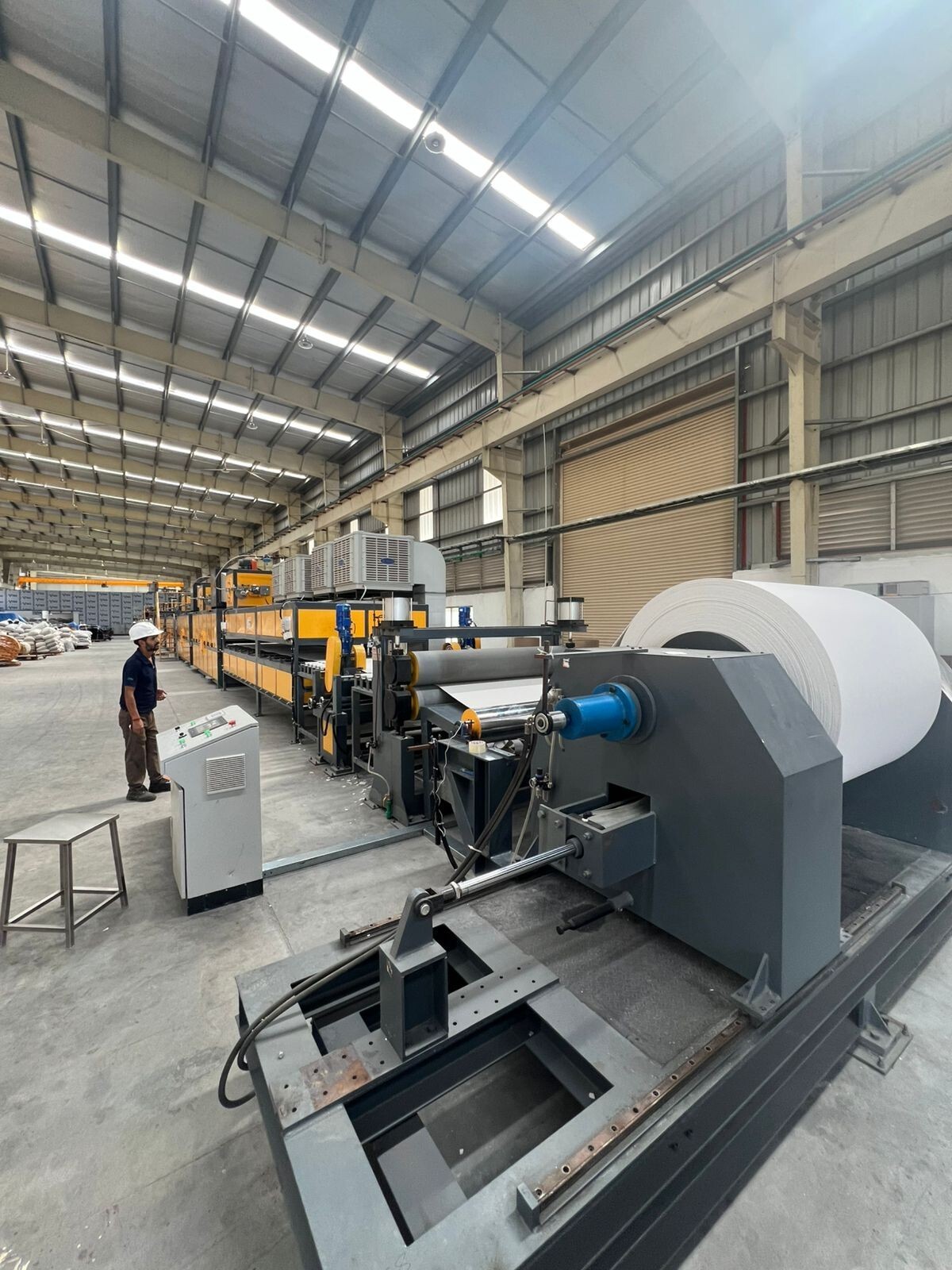
We manufacture ACP sheets that fabricators can cut, bend, drill, and fix smoothly using standard tools. This helps ensure clean edges, proper folds, and uniform panel alignment, reducing installation issues and rework on site.
5. Storage and Handling Before Installation
ACP sheets can get damaged even before installation if they are stored carelessly. Moisture, uneven stacking, or direct sunlight can affect the surface and weaken bonding.
We advise storing ACP sheets flat, covered, and in a dry, shaded area. Panels should be handled carefully and used in proper order. Good storage keeps the sheets in shape and avoids unnecessary problems during installation.
6. Customization Options
One of the reasons buyers prefer ACP sheets is the flexibility they offer in design. You are not limited to fixed colours or standard sizes. You can choose from a wide range of colours, finishes, panel sizes, and thicknesses to suit your project.
When the aluminum composite panel design matches the elevation layout and building style, installation becomes much faster and the final result looks more thought-out and aesthetic.
Final Thoughts
Buying ACP sheets is not just about choosing a colour or finish that looks good today. How the panels perform, how they age, and how much maintenance they need later all depend on the choices made at the beginning.
Things like panel thickness, core material, surface properties, fabrication ease, storage, and customization may seem like small details, but together they shape the overall outcome of your project. When these specifications are understood and selected carefully, installation becomes easy and long-term issues can be avoided.
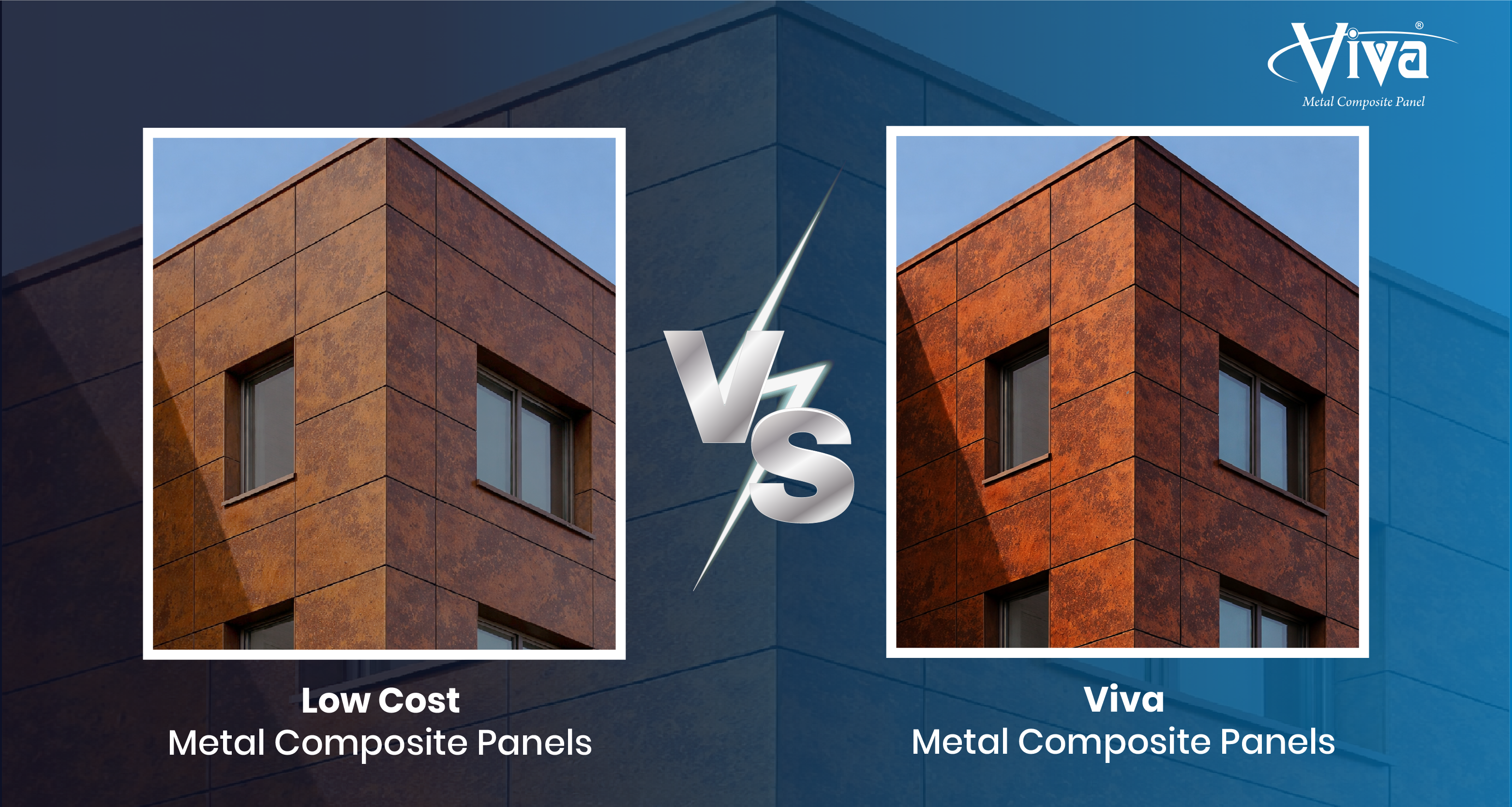
At VIVA, we combine our product expertise with real-world application knowledge to help buyers make the right choice. Our aluminium composite panels are designed to be reliable, meet safety expectations, and maintain their appearance over the years. And that’s probably where our ACPs stand as a value-driven choice compared to ordinary alternatives.
POPULAR POSTS
CATEGORIES
- Aluminium Compsoite panel 39
- ACP Sheet 165
- ACP Facade 7
- Copper Aluminium Sheet 1
- Fire Safety For Buildings 3
- ACP Cladding 12
- Colour Coated Aluminium Coil 2
- Aluminium Corrugated Composite Panel 1
- Facades 6
- Aluminium Honeycomb Panel 5
- Fire Retardant 5
- Zinc Composite Panel 4
- Corten Steel Series 1
- Metal Abstract Series 3
- Wooden ACP Sheet 1
- HPL Sheet 3
- Viva ACP Colour Coating 1
- Wall Cladding 2
- Applications of ACP Panel 1
- Viva ACP 13
- ACP Sheets for Architectural Projects 3
- PVDF vs Polyester 1
- ACP Sheets For Showroom 1
- Viva ACP on International Market 1
- Viva royal club app 1
- ACP Sheets for Branding Corporates 1
- Shades of Santa Fe 1
- Al Zinc Series 1
- ACP Sheet Sizes and Thicknesses 1