en
en
 Spanish
 Arabic
 Swahili
 French


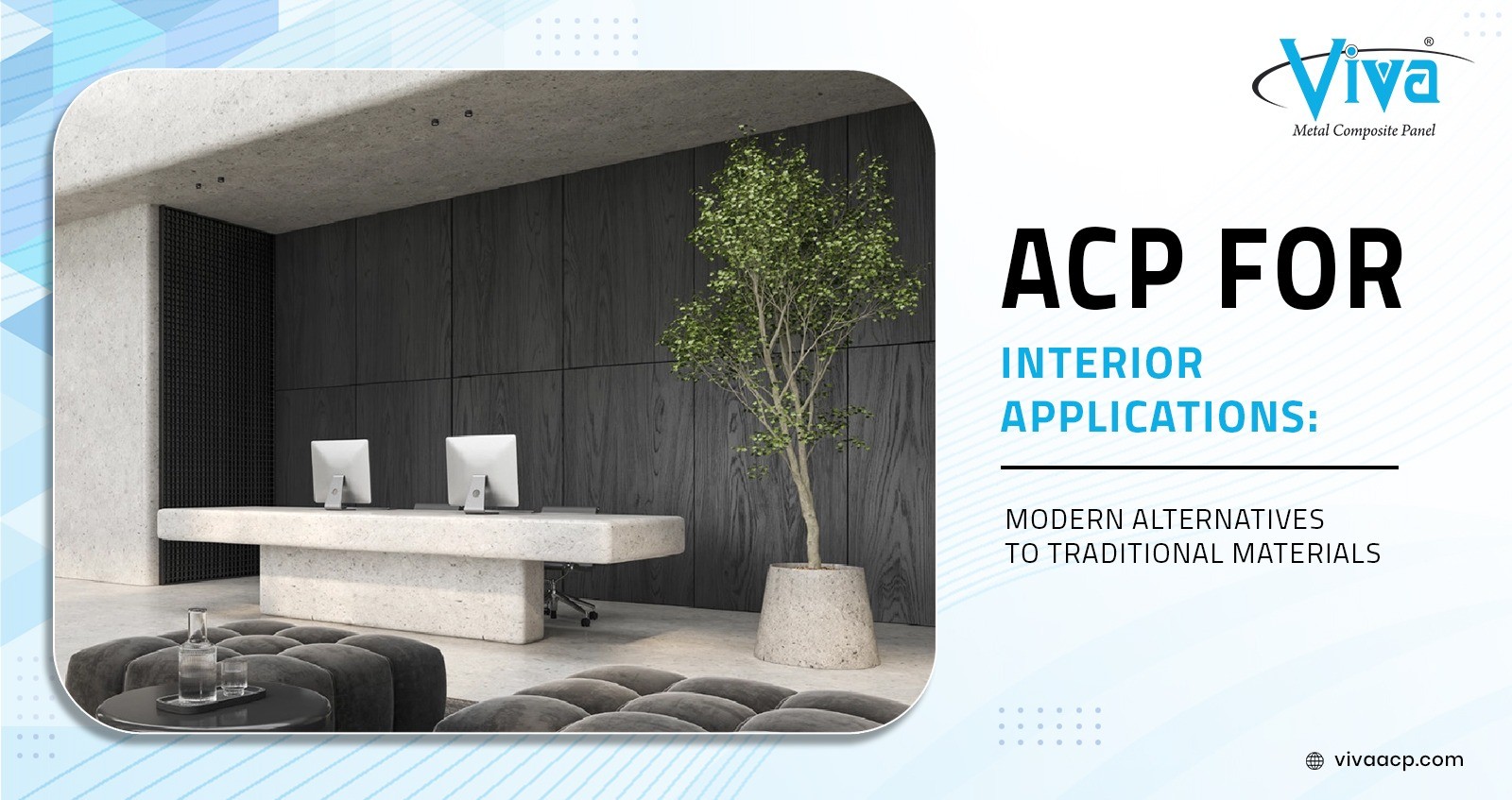
Interior design has moved far beyond conventional choices like wood, laminate, stone and solid metal. Today, architects and designers are looking for materials that offer aesthetic flexibility, durability, lightweight performance and low maintenance—all while meeting the evolving demands of modern spaces.
This is where Aluminium Composite Panels (ACP) are transforming interior design.
No longer limited to exterior cladding, ACP sheets are increasingly being specified for feature walls, ceilings, partitions, columns, furniture applications and decorative surfaces, offering a modern alternative to traditional materials.
Why Traditional Interior Materials Are Being Reconsidered
Conventional materials often come with limitations:
Traditional Material Common Challenges
Natural Wood Termite risk, moisture damage, warping
Stone/Marble Heavy, costly, difficult installation
Laminate Limited durability, surface wear
Solid Metal High cost, fabrication complexity
Paint/Wall Finishes Frequent maintenance required
What designers want today:
• Lightweight solutions
• Premium aesthetics
• Faster installation
• Lower maintenance
• Greater design versatility
• Long-term performance
ACP addresses all of these.
Modern Interior Applications of ACP
1. Feature Walls & Statement Panels
ACP is increasingly used to create sophisticated feature walls in residential, hospitality and commercial interiors. From metallic finishes to textured patterns and premium decorative surfaces, it enables striking visual impact with practical performance.
2. False Ceilings & Ceiling Design
Modern ceiling design is moving toward cleaner, more engineered finishes. ACP offers lightweight, durable solutions for ceiling applications while supporting contemporary forms, patterns and integrated lighting concepts.
3. Partitions & Space Dividers
For offices, retail spaces and commercial interiors, ACP is being used in partitions and dividers that combine privacy, durability and modern aesthetics. It offers a sleek alternative to conventional partition materials.
4. Column Cladding & Interior Surface Wrapping
Structural elements like columns and beams can be transformed into design features using ACP. Its flexibility allows clean wrapping and seamless finishes difficult to achieve with heavier traditional materials.
5. Furniture & Customized Interior Elements
ACP is also being used in modular furniture, cabinetry, counters and custom-built interior elements where lightweight fabrication and premium finishes are valued.
6. Decorative & Premium Finish Applications
Beyond standard applications, specialty ACP finishes are expanding possibilities for luxury interiors, textured surfaces and high-end decorative concepts across residential and commercial projects.
Why ACP Is Emerging as a Modern Alternative
Comparison: Traditional Materials vs ACP for Interiors
Feature Traditional Materials ACP
Weight Heavy Lightweight
Installation Time-intensive Faster
Maintenance Moderate to High Low
Design Flexibility Limited High
Durability Varies Excellent
Surface Finish Options Moderate Extensive
Key Advantages of ACP in Interior Design
1. Design Versatility
ACP is available in a wide range of finishes, textures and effects, making it adaptable across design styles.
2. Lightweight Performance
Compared to stone or solid metal, ACP reduces load while simplifying handling and installation.
3. Low Maintenance
Its durable surfaces help minimize upkeep compared to many traditional materials.
4. Durability
ACP performs well in demanding interior environments, including high-traffic commercial spaces.
5. Cost Efficiency
It can deliver premium visual appeal while optimizing installation and long-term maintenance costs.
Interior Design Trends Driving ACP Adoption
1. Mixed-Material Interiors
Designers are combining ACP with glass, wood, stone and lighting elements for layered contemporary interiors.
2. Minimalist Surface Design
Clean lines and seamless finishes are making ACP a preferred material for modern interiors.
3. Textured & Decorative Finishes
Demand is growing for finishes that go beyond plain surfaces to create visual depth and material character.
4. Performance-Driven Materials
Design decisions are increasingly balancing aesthetics with durability, maintenance and practicality.
Where ACP Is Commonly Used in Interiors
Residential
• Feature walls
• Modular kitchens
• Ceiling systems
• Wardrobe and furniture surfaces
Commercial
• Office interiors
• Retail fit-outs
• Reception areas
• Partitions and cladding
Hospitality
• Hotel lobbies
• Restaurant interiors
• Decorative wall systems
• Premium ceiling applications
Why Designers Are Looking Beyond Conventional Options
ACP is no longer seen simply as a cladding material.
It is increasingly viewed as a design material—one that offers the visual appeal of premium finishes, the practicality of lightweight construction and the performance modern interiors demand.
As interior design evolves, ACP is emerging as a strong alternative to traditional materials—not replacing them entirely, but expanding what designers can achieve.
Conclusion
Modern interior design is moving toward materials that combine aesthetics, efficiency and performance.
For architects, interior designers and project consultants, ACP offers a compelling alternative to traditional materials across a growing range of interior applications.
From feature walls and ceilings to partitions and premium decorative surfaces, aluminium composite panels are helping shape the future of interior design.
FAQs
1. Can ACP be used for interior applications?
Yes, ACP is widely used for feature walls, ceilings, partitions, furniture surfaces and decorative interior applications.
2. How is ACP different from traditional interior materials?
ACP offers lightweight performance, design flexibility, durability and lower maintenance compared to many conventional materials.
3. Is ACP suitable for luxury interior design?
Yes, decorative finishes and premium surface options make ACP suitable for high-end residential, hospitality and commercial interiors.
4. Can ACP replace materials like wood or stone?
ACP can serve as a modern alternative in many applications where lightweight performance, ease of installation and low maintenance are priorities.
5. Why are architects using ACP in modern interiors?
Architects use ACP for its combination of aesthetics, versatility, durability and performance-driven design benefits.
POPULAR POSTS

CATEGORIES
- Aluminium Compsoite panel 52
- ACP Sheet 170
- ACP Facade 9
- Copper Aluminium Sheet 1
- Fire Safety For Buildings 3
- ACP Cladding 14
- Colour Coated Aluminium Coil 2
- Aluminium Corrugated Composite Panel 1
- Facades 7
- Aluminium Honeycomb Panel 6
- Fire Retardant 8
- Zinc Composite Panel 4
- Corten Steel Series 1
- Metal Abstract Series 3
- Wooden ACP Sheet 1
- HPL Sheet 3
- Viva ACP Colour Coating 1
- Wall Cladding 2
- Applications of ACP Panel 1
- Viva ACP 14
- ACP Sheets for Architectural Projects 3
- PVDF vs Polyester 3
- ACP Sheets For Showroom 1
- Viva ACP on International Market 1
- Viva royal club app 1
- ACP Sheets for Branding Corporates 1
- Shades of Santa Fe 1
- Al Zinc Series 1
- ACP Sheet Sizes and Thicknesses 1
- Louvers and Baffles 1
- Sustainable Facades 1
ARCHIVES
Published by VIVA — Asia's Largest Manufacturer of Aluminium Composite Panels. 15M sq.mt capacity | 500+ shades | Thomas Bell-Wright FR A2+ Certified