en
 Spanish
 Arabic
 Swahili
 French


|
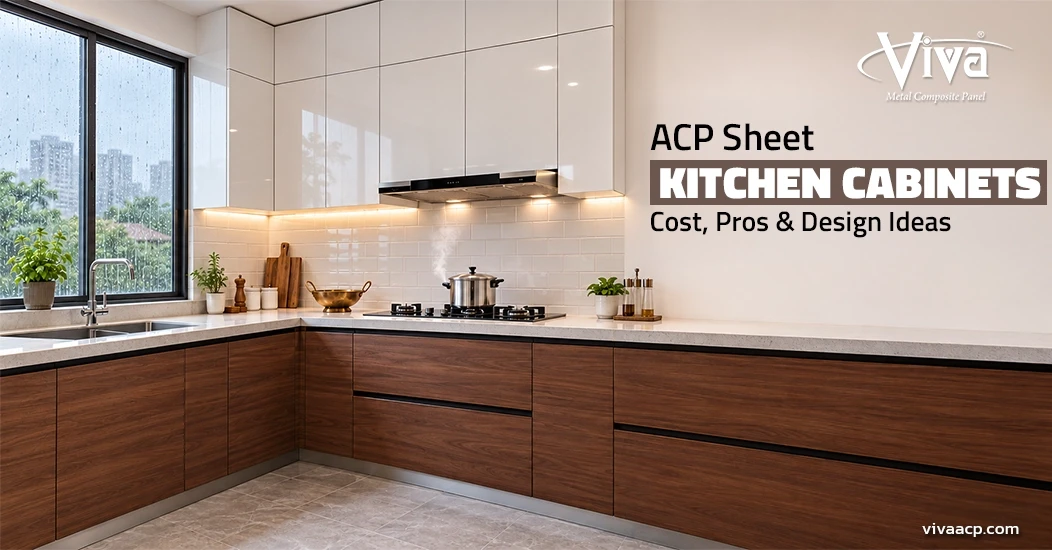
Quick answer ACP sheet makes a good kitchen cabinet shutter because it does not swell with water, resists termites and wipes clean easily. It works best on shutters, tall units and overhead cabinets, bonded to a water-resistant board such as BWP plywood. Keep ACP away from direct flame and the area right behind the hob, where tiles, glass or stainless steel are a better choice. |
The Indian kitchen is tough on furniture. There is steam from pressure cookers, oil from tadka, water splashing around the sink and, in many cities, months of monsoon humidity. Laminate edges lift, painted shutters stain, and cheaper boards swell near the sink within a couple of years.
That is why more homeowners and modular kitchen makers are asking about ACP sheet. It is the same aluminium composite material used on building facades, and it brings that toughness indoors. This guide looks honestly at where ACP works in a kitchen, where it does not, how it compares with other finishes, and how to design a kitchen around it.
How ACP behaves in a kitchen
An ACP sheet is two thin aluminium skins bonded to a core. In a kitchen, that means a surface that does not absorb water and does not provide food for termites or fungus.
|
Kitchen challenge |
How ACP handles it |
What to watch |
|
Water around the sink |
Excellent; the face does not absorb water |
Seal all cut edges and the bottom edge of shutters |
|
Steam and humidity |
Very good; no swelling or peeling |
Use a water-resistant core such as BWP plywood |
|
Oil and grease |
Wipes off easily with mild soap |
Avoid harsh solvents on the coating |
|
Termites |
Not affected |
The core board still needs to be termite-resistant |
|
Heat near the hob |
Limited; high direct heat can damage the surface |
Use tiles, glass or steel directly behind the burners |
|
Knocks and scratches |
Good, better with anti-scratch finishes |
Thin skins can dent; choose a quality sheet |
The key point is that ACP is a facing material. The strength of the cabinet comes from the carcass and the board behind the sheet. Choose those well and the ACP will do its job for years.
Where to use ACP in the kitchen, and where not to
Used in the right places, ACP gives a clean, modern kitchen that is easy to look after.
• Base cabinet shutters: a great fit, especially around the sink where water damage is common.
• Overhead cabinets: light and easy to clean, and they stay flat even when large.
• Tall units and pantry doors: ACP gives a seamless look on big shutters that laminate struggles with.
• Loft shutters: low weight makes them easier to open and kinder to hinges.
• Breakfast counter cladding and end panels: a good place for a wood-grain or marble finish.
Avoid ACP on the wall directly behind the gas stove, under the hob and inside the chimney area. Direct flame and very high heat can discolour the finish and damage the core. Most designers use tiles, a toughened glass backsplash or stainless steel in that zone.
ACP compared with other kitchen finishes
|
Finish |
Water resistance |
Cost (relative) |
Look |
Upkeep |
|
ACP sheet |
Excellent |
Mid |
Gloss, matt, wood, marble, metallic |
Wipe clean |
|
Laminate on plywood |
Moderate; edges can lift |
Low to mid |
Very wide range |
Edges need care near the sink |
|
Acrylic |
Good |
Mid to high |
High gloss, mirror-like |
Shows scratches and fingerprints |
|
PU or duco paint |
Good |
High |
Smooth, seamless colour |
Can chip; touch-ups needed |
|
Stainless steel |
Excellent |
High |
Industrial, professional |
Shows smudges |
|
PVC or WPC boards |
Excellent |
Low to mid |
Limited, often plain |
Easy, but can yellow over time |
ACP sits between laminate and acrylic on cost, with better water resistance than laminate and a wider choice of finishes than PVC or WPC. For many families, that balance is exactly right.
Design ideas for an ACP kitchen
Because ACP comes in so many finishes, it is easy to get a designer look.
• White gloss with walnut: white overheads keep the kitchen bright, and walnut base units add warmth.
• Two-tone grey: light grey overheads with charcoal base units, finished with matt black handles.
• Marble look: marble-texture ACP on the breakfast counter end panel and tall unit, with plain shutters elsewhere.
• Pastel modern: soft sage, powder blue or blush pink shutters with white or wood accents, popular in compact city flats.
• All-wood warmth: a single light oak or teak finish across all shutters for a calm, natural kitchen.
• Metallic accents: a brushed champagne or bronze finish on one tall unit or the open shelves.
In small kitchens, lighter and glossy shades reflect light and make the space feel bigger. In large, open kitchens, a darker matt finish on the island or base units can anchor the room.
ACP for different kitchen layouts
|
Layout |
Common in |
How to use ACP |
Design tip |
|
L-shaped |
Most 2BHK and 3BHK flats |
ACP on all shutters, wood grain on the tall unit |
Use a light colour on the long wall to open up the space |
|
Parallel or galley |
Compact city apartments |
Gloss ACP on overheads, matt on base units |
Gloss reflects light in narrow kitchens |
|
U-shaped |
Larger homes and villas |
Two tones: one for overheads, one for base units |
Keep the corner unit in the base colour |
|
Island kitchen |
Open-plan homes |
Marble or wood ACP on the island sides and end panels |
Make the island the feature and keep walls simple |
|
Straight line |
Studio flats and small homes |
One continuous finish across the run |
Handle-less profiles make it feel larger |
Why ACP suits coastal and humid cities
In Mumbai, Chennai, Kochi, Goa and Visakhapatnam, humidity stays high for much of the year, and kitchens near the sea also face salt in the air. Laminate edges lift faster here, and painted finishes can bubble. ACP, especially on an aluminium frame or BWP plywood, handles these conditions far better. Stainless steel hinges and channels are a must in these cities, because ordinary steel hardware rusts quickly.
Hygiene finishes for the kitchen
The kitchen is where hygiene matters most. Viva makes anti-bacterial ACP sheets with a surface that limits the growth of bacteria, which is a sensible choice for shutters around the sink, the dining area and in homes with young children or elderly parents.
Anti-scratch finishes are also worth considering for base units, which take knocks from utensils, chairs and feet. Both finishes keep the cabinets looking newer for longer.
How ACP kitchen shutters are made
Most modular kitchen makers bond ACP to a board, rather than using the sheet on its own.
• The carcass is usually BWP or BWR plywood, or an aluminium frame for a fully water-proof build.
• Shutters are made from plywood or a board, with ACP bonded to the outer face using a suitable contact adhesive or structural tape over the full surface.
• A balancing sheet or laminate is applied to the inner face so the shutter does not bow.
• Edges are finished with aluminium profiles or edge banding, and all cut edges are sealed.
• Handles can be fixed, recessed or replaced with handle-less profiles for a clean look.
Some makers build complete cabinets from aluminium frames with ACP infill panels. This is the most water-resistant option and works especially well in coastal cities and for sink units.
The right sheet spec for kitchens
|
Spec |
Recommendation |
Why |
|
Total thickness |
3 mm for most shutters |
Light, easy to work and flat when bonded |
|
Aluminium skin |
0.21 to 0.3 mm |
Enough for interior use; thicker skins dent less |
|
Coating |
Good polyester; PVDF is optional indoors |
Holds colour and cleans easily |
|
Special finishes |
Anti-bacterial and anti-scratch |
Better hygiene and longer life |
|
Core board |
BWP plywood or aluminium frame |
Resists water and termites |
What decides the cost of ACP kitchen cabinets
Prices vary widely between cities and makers, so instead of a single figure, here are the factors that move the quote.
• The size of the kitchen and number of units.
• The carcass material: plywood grade or aluminium frame.
• The sheet finish: plain colours cost less than wood, marble, metallic and special finishes.
• Hardware: soft-close hinges, tandem drawers, corner units and baskets.
• Design details such as handle-less profiles, open shelves and lighting.
• Installation and finishing quality.
When you compare quotes, ask each maker to list the sheet brand, thickness, core board and hardware. A lower price often hides a thinner sheet, a cheaper board or basic hardware.
Caring for ACP kitchen cabinets
• Wipe shutters daily or every few days with a soft cloth and mild soap water.
• Clean oil splashes quickly before they set.
• Avoid steel wool, scouring powder and solvents such as thinner or acetone.
• Check the bottom edges of sink unit shutters every six months and reseal if needed.
• Peel off all protective film as soon as the kitchen is installed.
For more ideas on using ACP indoors, read Viva's guide to ACP for interior applications .
Why Viva for kitchen interiors
Viva offers over 500 shades, including gloss, matt, wood, marble and metallic finishes, along with anti-bacterial and anti-scratch options designed for interiors. With more than 25 years of manufacturing, more than 250 in-house quality tests and over 100 experience centres, you can see and touch the finishes before you decide. Viva ACP: Koi Sawaal Nai Karta.
Frequently asked questions
Is ACP sheet good for kitchen cabinets?
Yes, for shutters, overhead units, tall units and loft doors. ACP does not swell with water, resists termites and wipes clean easily. Bond it to a water-resistant board such as BWP plywood, seal all edges, and avoid using it directly behind the gas stove.
Can ACP be used behind the gas stove?
It is better not to. Direct flame and very high heat can discolour the ACP finish and damage the core. Use tiles, a toughened glass backsplash or stainless steel directly behind the hob, and use ACP on the cabinets around it.
Is ACP better than laminate for kitchens?
ACP handles water and steam better than laminate, especially near the sink, and gives a flatter finish on large shutters. Laminate is usually cheaper and offers a huge range of designs. Many kitchens use ACP on wet-zone and feature units and laminate elsewhere.
Which ACP thickness is best for kitchen shutters?
A 3 mm ACP sheet bonded to a plywood or board shutter is usually ideal for kitchens. It is light, stays flat and is easy to work with. Thicker skins resist dents better, which helps on base units.
How do I clean ACP kitchen cabinets?
Wipe them with a soft cloth and mild soap water, and remove oil splashes quickly. Avoid steel wool, abrasive powders and strong solvents. For stubborn marks, a little diluted isopropyl alcohol on a soft cloth works well; test it on a hidden spot first.
Do ACP kitchen cabinets last long?
Yes. With a good quality sheet, a water-resistant core board, sealed edges and stainless steel hardware, ACP kitchen cabinets can look good for 10 to 15 years or more. They do not swell or attract termites, which are the two most common reasons kitchens fail early in India.
Planning a new kitchen? Visit a Viva experience centre to see gloss, wood, marble and anti-bacterial finishes side by side, or send your kitchen plan through the enquiry form for shade and sheet suggestions.
POPULAR POSTS

CATEGORIES
- Aluminium Compsoite panel 50
- ACP Sheet 172
- ACP Facade 8
- Copper Aluminium Sheet 1
- Fire Safety For Buildings 2
- ACP Cladding 14
- Colour Coated Aluminium Coil 2
- Aluminium Corrugated Composite Panel 1
- Facades 5
- Aluminium Honeycomb Panel 6
- Fire Retardant 8
- Zinc Composite Panel 4
- Corten Steel Series 1
- Metal Abstract Series 2
- Wooden ACP Sheet 1
- HPL Sheet 3
- Viva ACP Colour Coating 1
- Wall Cladding 2
- Applications of ACP Panel 1
- Viva ACP 13
- ACP Sheets for Architectural Projects 3
- PVDF vs Polyester 3
- ACP Sheets For Showroom 1
- Viva ACP on International Market 1
- Viva royal club app 1
- ACP Sheets for Branding Corporates 1
- Shades of Santa Fe 1
- Al Zinc Series 1
- ACP Sheet Sizes and Thicknesses 1
- Louvers and Baffles 1
- Sustainable Facades 1
- Aluminium composite material 0
ARCHIVES
Explore the ranges


Published by VIVA - Asia's Largest Manufacturer of Aluminium Composite Panels. 15M sq.mt capacity | 500+ shades | Thomas Bell-Wright FR A2+ Certified