en
en
 Spanish
 Arabic
 Swahili
 French


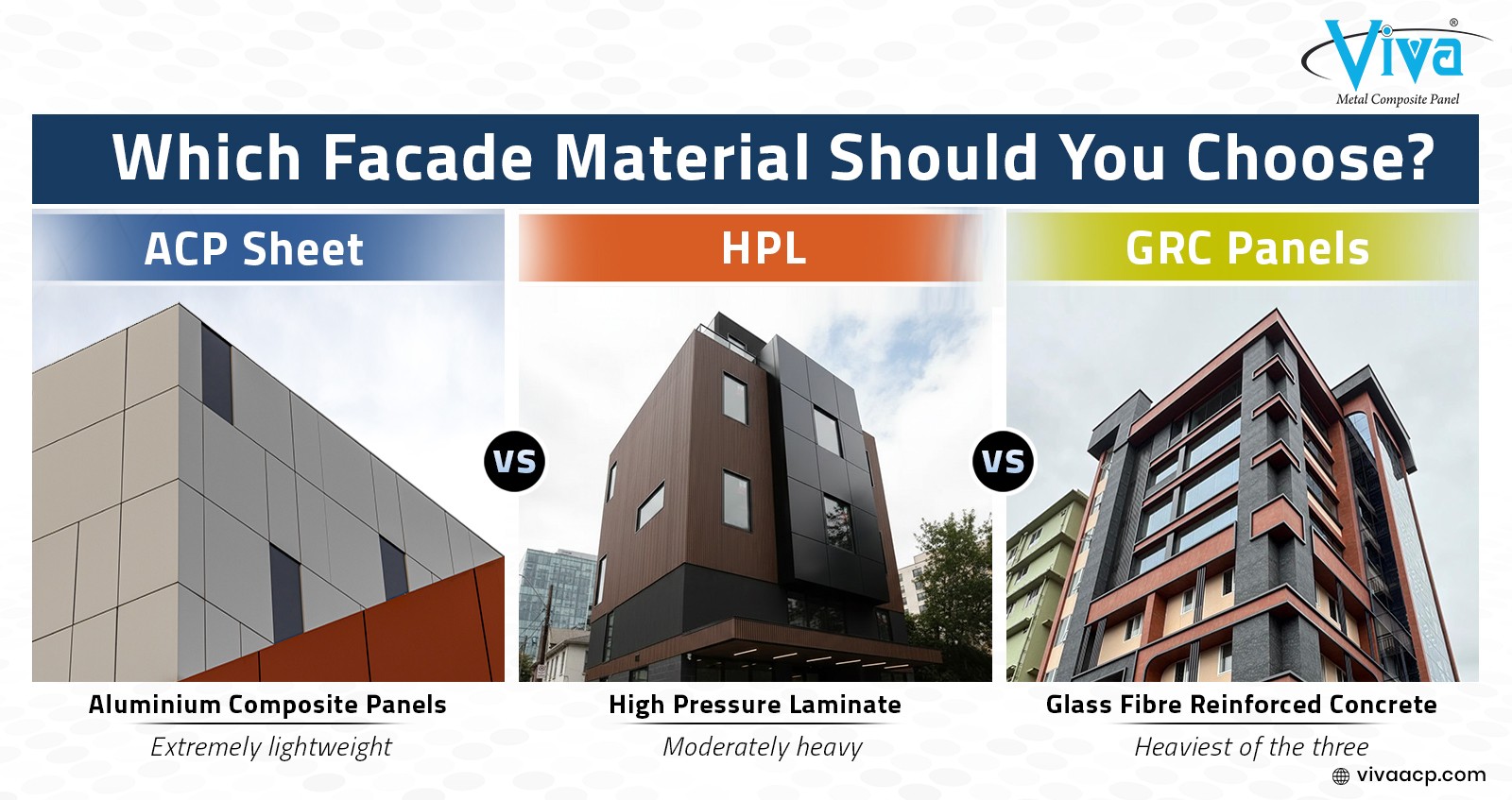
Choosing the right facade cladding material can make or break your building's appearance, performance, and long-term value. With so many options available today — ACP sheets, HPL panels, and GRC cladding — architects, builders, and project owners often find themselves overwhelmed. In this ACP vs HPL vs GRC comparison guide, we break down each material's strengths, limitations, costs, and ideal applications so you can make a confident, informed decision for your next exterior cladding project.
What Are ACP Sheets, HPL Panels, and GRC? A Quick Overview
Before diving into the comparison, let's understand what each of these popular facade cladding materials actually is.
ACP Sheets (Aluminium Composite Panels)
ACP sheets consist of two thin aluminium layers bonded to a polyethylene (PE) or fire-retardant (FR) mineral core. They are lightweight, smooth, and available in an extensive range of colours and finishes — from plain solids to metallic, wood-grain, and brushed textures. ACP has been the dominant choice for commercial exteriors across India and globally for over two decades.
At Viva ACP, we offer premium-grade ACP sheets engineered for Indian climatic conditions, ensuring durability, UV resistance, and superior finish quality.
HPL Panels (High Pressure Laminate)
HPL panels are manufactured by bonding multiple layers of kraft paper with decorative surface sheets under extreme heat and pressure. The result is a dense, rigid board with a natural or decorative surface. HPL is commonly used for both interior and exterior applications, especially where a realistic wood, stone, or matte finish is desired.
GRC Panels (Glass Fibre Reinforced Concrete)
GRC (also known as GFRC — Glass Fibre Reinforced Concrete) is a composite material made from cement, sand, water, and alkali-resistant glass fibres. It mimics the look of natural stone, terracotta, or concrete at a fraction of the weight. GRC is popular for heritage restoration projects, luxury hospitality buildings, and architecturally complex facades.
ACP vs HPL vs GRC: Head-to-Head Facade Cladding Comparison
1. Weight and Structural Load
● ACP: Extremely lightweight — typically 3–6 kg/m². Easy to install and places minimal load on the building structure.
● HPL: Moderately heavy — around 8–12 kg/m² depending on thickness. Requires a proper subframe system.
● GRC: Heaviest of the three — usually 15–25 kg/m², which may require structural assessment before installation.
Verdict: For projects where weight is a concern, ACP sheets are the clear winner.
2. Aesthetic Versatility
One of the most important factors in choosing the best exterior cladding material is how it looks.
ACP Sheets
ACP offers unmatched versatility. With thousands of colour options, PVDF and PE coatings, and surface finishes ranging from gloss to matte and mirror, ACP can replicate nearly any aesthetic. Digital print ACP even allows custom graphics or large-scale murals.
HPL Panels
HPL panels excel at creating natural, tactile appearances. Their wood and stone textures are exceptionally realistic, making them ideal for biophilic design trends. However, their colour palette is more limited compared to ACP.
GRC Panels
GRC panels offer the most architectural uniqueness. They can be cast in virtually any three-dimensional shape, texture, or pattern, making them ideal for decorative facades, arches, cornices, and heritage-style buildings. However, customisation comes at a premium cost and longer lead time.
Verdict: ACP wins on colour versatility and availability. HPL wins on natural textures. GRC wins on 3D sculptural forms.
3. Durability and Weather Resistance
Feature ACP HPL GRC
UV Resistance Excellent (PVDF coating) Good Good
Moisture Resistance Excellent Moderate (swells if exposed) Excellent
Impact Resistance Moderate High Very High
Lifespan 20–25 years 15–20 years 30–50 years
Fire Rating FR/A2 grade available Fire-resistant Non-combustible
HPL can be vulnerable to moisture penetration at edges if not properly sealed, which is a significant concern for Indian monsoon conditions. ACP with FR core and PVDF coating remains the most practical balance of durability and weather resistance for Indian projects.
4. Cost Comparison
Budget plays a major role in any construction project. Here's a general price comparison:
● ACP Sheets: ₹60–₹200 per sq. ft. (depending on brand, thickness, and coating)
● HPL Panels: ₹90–₹250 per sq. ft.
● GRC Panels: ₹300–₹800+ per sq. ft. (custom designs cost significantly more)
For large-scale commercial projects, ACP delivers the best value for money among all three facade cladding materials. Explore our ACP products to find the right panel for your budget.
Verdict: ACP is the most cost-effective solution, followed by HPL, with GRC being a premium investment.
5. Installation and Maintenance
ACP
● Lightweight and easy to cut, route, and bend
● Quick dry cladding installation with aluminium subframes
● Low maintenance — wipe clean with a damp cloth
● Easily replaceable panels if damaged
HPL
● Heavier and more brittle — requires skilled installation
● Susceptible to warping if moisture infiltrates edges
● Moderate maintenance — periodic edge sealing required
GRC
● Requires specialised installation teams
● Heavier load management during installation
● Very low maintenance once installed
● Difficult and expensive to repair or replace individual panels
6. Sustainability and Green Building
With IGBC and LEED certifications becoming standard in Indian commercial real estate, sustainability matters.
● ACP: Aluminium is 100% recyclable. Many ACP manufacturers now offer low-VOC coatings and recycled core materials.
● HPL: Made from paper and resins — partially recyclable. Some HPL brands are FSC certified.
● GRC: Uses natural cement and glass fibres. No harmful off-gassing. Extremely long lifespan reduces replacement frequency.
Which Facade Material Should You Choose?
Here's a quick decision guide based on your project type:
Project Type Recommended Material
Commercial offices, IT parks, malls ACP Sheets
Schools, hospitals, residential complexes ACP (FR grade) or HPL
Luxury hotels, heritage restoration GRC Panels
Biophilic or nature-inspired design HPL Panels
High-rise facades with budget constraint ACP Sheets
Sculptural or uniquely shaped buildings GRC Panels
For most commercial and residential projects in India, ACP sheets offer the ideal combination of aesthetics, durability, fire safety, and cost-efficiency.
Why Choose Viva ACP for Your Facade Cladding Needs?
Viva ACP has been at the forefront of the facade cladding industry for years, supplying architects, contractors, and builders across India with premium ACP solutions. Our range includes:
● PVDF-coated ACP for long-lasting exterior applications
● FR-grade ACP meeting fire safety standards
● Wood grain and stone finish ACP for natural aesthetics
● Custom sizes and digital print panels for unique projects
Whether you're designing a sleek corporate tower or a boutique retail store, Viva ACP's product range has the right solution to bring your vision to life.
Conclusion
The ACP vs HPL debate and the broader facade cladding comparison with GRC all come down to your project's specific priorities. If you need a lightweight, cost-effective, visually versatile, and easy-to-maintain material - ACP sheets are the best exterior cladding material for most applications. HPL suits projects demanding natural textures, while GRC is best reserved for premium architectural and heritage projects. Understanding each material's strengths ensures your building looks great, performs well, and stays within budget for the long run.
Frequently Asked Questions (FAQs)
Q1. What is the main difference between ACP and HPL panels?
ACP sheets are made of aluminium with a composite core, making them lighter and more colour-versatile. HPL panels are made from compressed paper layers, offering more realistic wood and stone textures but at a higher weight and cost.
Q2. Which facade cladding material is best for Indian climatic conditions?
ACP with PVDF coating and FR core is best suited for India's hot, humid, and monsoon-prone climate due to its excellent UV resistance, moisture resistance, and thermal stability.
Q3. Is GRC heavier than ACP?
Yes. GRC panels are significantly heavier — 15 to 25 kg/m² compared to ACP's 3–6 kg/m². This affects structural requirements and installation costs.
Q4. How long does ACP cladding last on exterior facades?
High-quality ACP sheets with PVDF coating can last 20–25 years with minimal maintenance, making them one of the most durable and cost-effective facade cladding materials available.
Q5. Can ACP sheets be used for both interior and exterior applications?
Yes, ACP sheets are highly versatile and widely used for exterior facades, interior wall cladding, signage, false ceilings, and partition walls. For exterior use, always opt for PVDF-coated or FR-grade ACP panels.
POPULAR POSTS
CATEGORIES
- Aluminium Compsoite panel 52
- ACP Sheet 170
- ACP Facade 9
- Copper Aluminium Sheet 1
- Fire Safety For Buildings 3
- ACP Cladding 14
- Colour Coated Aluminium Coil 2
- Aluminium Corrugated Composite Panel 1
- Facades 7
- Aluminium Honeycomb Panel 6
- Fire Retardant 8
- Zinc Composite Panel 4
- Corten Steel Series 1
- Metal Abstract Series 3
- Wooden ACP Sheet 1
- HPL Sheet 3
- Viva ACP Colour Coating 1
- Wall Cladding 2
- Applications of ACP Panel 1
- Viva ACP 14
- ACP Sheets for Architectural Projects 3
- PVDF vs Polyester 3
- ACP Sheets For Showroom 1
- Viva ACP on International Market 1
- Viva royal club app 1
- ACP Sheets for Branding Corporates 1
- Shades of Santa Fe 1
- Al Zinc Series 1
- ACP Sheet Sizes and Thicknesses 1
- Louvers and Baffles 1
- Sustainable Facades 1
ARCHIVES
Published by VIVA — Asia's Largest Manufacturer of Aluminium Composite Panels. 15M sq.mt capacity | 500+ shades | Thomas Bell-Wright FR A2+ Certified