When it comes to designing a building façade or crafting a premium interior space, one decision often creates confusion - HPL laminate sheet vs ACP sheet.
At first glance, both look modern. Both promise durability. Both claim to enhance aesthetics.
But here’s the reality: choosing the wrong material for the wrong application can cost lakhs in maintenance, repairs, or even structural compromise.
If you’re an architect, developer, fabricator, or dealer, this guide will help you make a confident, technically sound decision - especially for Indian climatic conditions.
Understanding the Basics: What Are HPL and ACP Sheets?
What is an HPL Laminate Sheet?
HPL (High-Pressure Laminate) sheets are made by compressing layers of kraft paper infused with resins under high heat and pressure. The result? A dense, rigid decorative panel commonly used in:
Exterior cladding
Balcony panels
Compact partitions
Furniture applications
HPL sheets are popular for wood-like finishes and textured appearances.
What is an ACP Sheet?
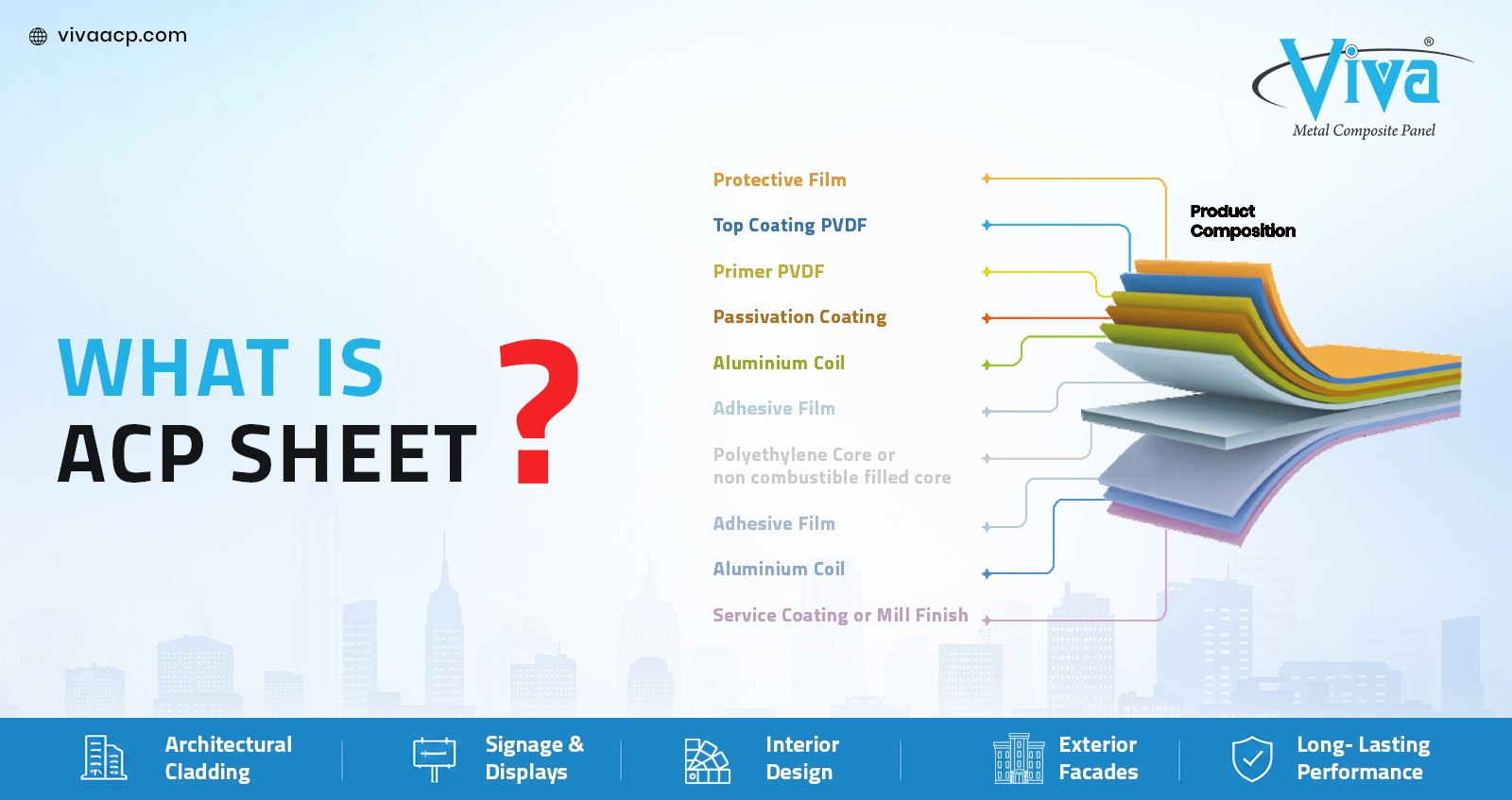
An Aluminium Composite Panel (ACP) consists of two aluminium sheets bonded to a non-aluminium core. This engineered sandwich structure delivers:
Lightweight strength
Excellent flatness
High impact resistance
Superior weather durability
Premium manufacturers like VIVA ACP design ACP sheets with advanced coatings such as PVDF for exterior use and PE coating for interiors, ensuring long-term performance.
HPL Laminate Sheet vs ACP Sheet: Quick Comparison
Here’s a simplified comparison for decision-makers:
| Feature | HPL Laminate Sheet | ACP Sheet |
|---|---|---|
| Core Material | Resin & kraft paper | Non-aluminium core with aluminium skins |
| Weight | Heavier | Lightweight |
| Flexibility | Limited bending | Excellent fabrication flexibility |
| Fire Performance | Moderate | Available in Fire-retardant ACP |
| Exterior Durability | Good | Excellent with PVDF coating |
| Finish Options | Wood & textured | Solid, metallic, marble, wooden, custom finishes |
| Maintenance | Moderate | Low maintenance |
| Indian Climate Suitability | Moderate | Highly suitable |
For large façades, commercial buildings, and high-rise structures, ACP often becomes the preferred choice.
Performance in Indian Climate: Which Material Survives Better?
India’s climate is harsh and diverse - extreme heat, heavy rainfall, coastal humidity, pollution, and dust.
Here’s where the difference becomes critical.
ACP Sheet for Exterior
Premium ACP sheet for exterior applications comes with PVDF coating, offering:
UV resistance
Color retention for years
Anti-corrosion properties
Resistance to heavy rainfall
This makes ACP ideal for cities like Mumbai (humidity), Delhi (pollution), and Chennai (coastal corrosion).
HPL for Exterior
HPL performs decently but can face challenges in:
Long-term UV exposure
Edge swelling if installation isn’t precise
Surface fading over extended years
In high-rise façades, maintenance access becomes expensive - so durability matters.
Fire Safety: A Non-Negotiable Factor
Post several high-rise fire incidents globally, fire compliance is no longer optional.
Fire-Retardant ACP
Modern fire-retardant ACP panels are designed to:
Reduce flame spread
Produce lower smoke emission
Meet international fire safety standards
This makes ACP a safer choice for commercial buildings, hospitals, airports, and IT parks.
HPL sheets offer basic resistance but do not match certified fire-retardant ACP in large-scale façade applications.
For developers prioritizing safety compliance, ACP becomes strategically stronger.
Design Flexibility & Fabrication Advantage
Here’s where fabricators truly appreciate ACP.
ACP Advantages:
Easy routing & bending
Curved façade possibilities
Seamless large panel installation
Lightweight reduces structural load
HPL sheets are rigid and heavier, limiting complex façade designs.
If your project involves modern elevations, corporate branding panels, or dynamic architectural elements - ACP offers creative freedom.
Interior Applications: Which Works Better?
Both materials work indoors - but for different purposes.
Interior ACP Sheet Applications:
False ceilings
Column covers
Retail interiors
Signage panels
Lift cladding
PE-coated ACP is ideal for interior use due to cost efficiency and aesthetics.
HPL Interior Use:
Furniture surfaces
Compact partitions
Washroom cubicles
If the focus is furniture-grade compact panels, HPL makes sense.
If the focus is interior wall cladding or decorative panels, ACP wins in aesthetics and installation speed.
PVDF vs PE Coating: Why It Matters
Many buyers overlook coating type - and regret later.
H3 PVDF Coating
Designed for exterior use
Superior weather resistance
Long-lasting color stability
Higher durability
H3 PE Coating
Designed for interior use
Cost-effective
Good finish quality
Choosing wrong coating is one of the most common façade mistakes.
For exterior cladding materials, always insist on PVDF-coated ACP.
Sustainability & Green Building Relevance
Modern architecture demands sustainability.
ACP panels:
Are recyclable
Reduce structural load
Improve insulation performance
Support green building ratings
HPL also has durability advantages, but ACP’s lightweight nature contributes to energy-efficient construction.
For IGBC or LEED-aligned projects, ACP offers better façade efficiency potential.
Common Mistakes Buyers Make
Avoid these costly errors:
Choosing PE coating for exterior
Ignoring fire-retardant requirement
Selecting material only on price
Not checking warranty & brand credibility
Overlooking installation expertise
Façade material is not a cosmetic decision - it’s a long-term structural investment.
When Should You Choose HPL?
Choose HPL if:
You need compact, thick panels
Wood-texture aesthetics are primary
Application is low-rise or balcony-level
Furniture-grade usage is intended
When Should You Choose ACP?
Choose ACP if:
It’s a high-rise façade
You need fire-retardant compliance
You want lightweight cladding
Long-term color retention is required
Complex design flexibility is needed
For most commercial exterior projects in India, ACP emerges as the more strategic and future-ready choice.
Why Premium Brands Like VIVA ACP Matter
Material quality varies drastically by manufacturer.
Premium ACP manufacturers focus on:
Certified fire-retardant cores
High-quality PVDF coating
Advanced bonding technology
Uniform thickness tolerance
Long-term warranties
For architects and developers, brand reliability reduces risk significantly.
You can also explore related resources like:
“Aluminium ACP Sheet: Types, Benefits & Applications”
“Latest ACP Sheet Designs for Exterior Elevation”
“Fire-Retardant ACP: Complete Guide for Commercial Projects”
Final Verdict: HPL Laminate Sheet vs ACP Sheet
Both materials have their place.
But if the project demands durability, weather resistance, fire safety, design flexibility, and suitability for Indian climate - ACP sheet clearly stands ahead for most exterior applications.
Choosing the right façade material today defines your building’s performance for the next 15–20 years.
Frequently Asked Questions (FAQs)
1. Which is better for exterior use - HPL or ACP sheet?
For large façades and high-rise buildings, ACP sheet with PVDF coating is generally better due to superior weather resistance, lightweight structure, and fire-retardant options.
2. Is ACP more durable than HPL?
Yes, especially in exterior conditions. ACP with PVDF coating offers better UV resistance and color retention compared to HPL sheets.
3. Can ACP sheets be used for interior design?
Absolutely. PE-coated interior ACP sheets are widely used for ceilings, wall cladding, and retail interiors.
4. Are ACP sheets fire-resistant?
Yes, certified fire-retardant ACP panels are available for commercial and high-rise applications.
5. Which material is more cost-effective?
Initial cost may vary, but ACP often provides better long-term value due to lower maintenance and longer lifespan.


en
Spanish
Arabic
Swahili
French