en
en
 Spanish
 Arabic
 Swahili
 French


Introduction
When it comes to Aluminium Composite Panels (ACP), one of the most critical decisions is choosing the right surface coating. The coating determines how the panel looks, how long it lasts, and how well it performs in different environments. The two most common coating types are PVDF (Polyvinylidene Fluoride) and PE (Polyester) — each with its own set of advantages and ideal use cases.
In this blog, Viva ACP breaks down the differences between PVDF and PE coatings to help you make the most informed decision for your project.
What is a Surface Coating on ACP Sheets?
A surface coating on an ACP sheet serves multiple functions. It enhances the aesthetic appeal of the panel, protects the aluminium from oxidation and weathering, provides UV resistance, and determines the panel's long-term colour stability. The quality of the coating directly impacts the lifespan and maintenance requirements of the ACP installation.
All ACP sheets — including those from Viva ACP — undergo a coil-coating process where paint is applied to the aluminium rolls before the panels are laminated together. This ensures a smooth, even, and durable finish.
What is PE (Polyester) Coating?
Polyester (PE) coating is the more economical of the two options. It is made from polyester resin and offers a decent level of durability and colour retention for interior and low-exposure applications. PE coatings are applied in a thin layer and are suitable for environments where the panel is not exposed to harsh outdoor conditions.
Key Properties of PE Coating
• Economical and budget-friendly
• Good colour options and aesthetic variety
• Suitable for interior use and semi-sheltered areas
• Lower UV resistance compared to PVDF
• Tends to fade or chalk over extended outdoor exposure
What is PVDF (Polyvinylidene Fluoride) Coating?
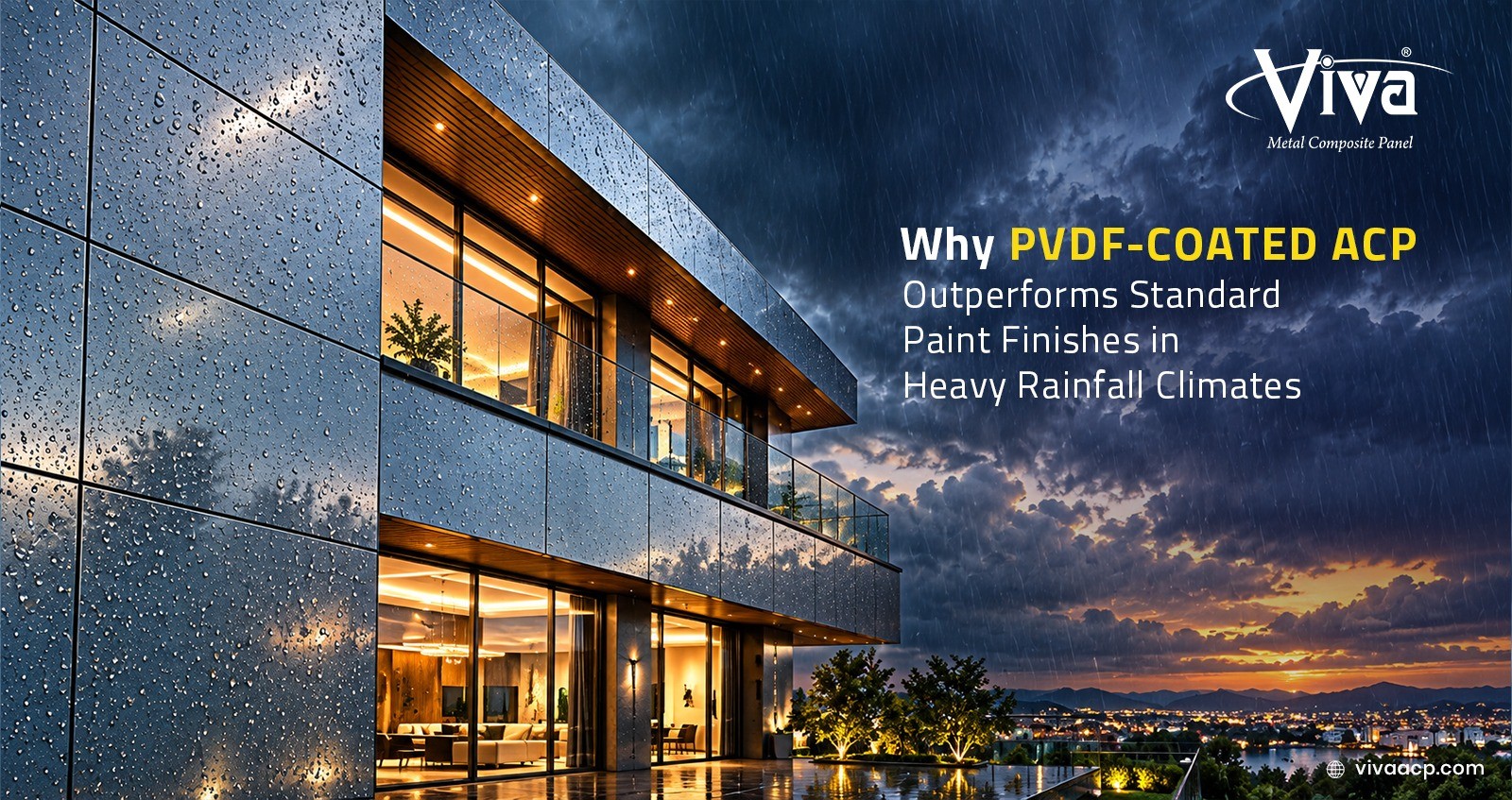
PVDF is a high-performance fluoropolymer coating that is known for its exceptional durability, UV resistance, and colour retention. PVDF-coated ACP sheets can withstand harsh environmental conditions — including intense sunlight, rain, pollution, and coastal salinity — making them the preferred choice for exterior facades of commercial buildings.
PVDF coatings typically contain 70% Kynar 500 or Hylar 5000 resin, which gives them their outstanding performance characteristics. They are widely specified by architects for high-end projects where long-term aesthetics and performance are non-negotiable.
Key Properties of PVDF Coating
• Superior UV resistance and colour stability
• Excellent weathering and chemical resistance
• Retains gloss and colour for 15–25 years
• Ideal for exterior facades in tropical, coastal, and industrial zones
• Higher initial cost, but lower long-term maintenance cost
PVDF vs PE: Side-by-Side Comparison
| Feature | PVDF Coating | PE Coating |
|---|---|---|
| Durability | 15–25 years | 5–10 years |
| UV Resistance | Excellent | Moderate |
| Colour Retention | Superior | Moderate (may fade) |
| Weather Resistance | High | Low to Moderate |
| Chemical Resistance | Excellent | Moderate |
| Cost | Higher | Lower |
| Best Use | Exterior facades, coastal areas | Interiors, signage, temporary use |
| Maintenance | Minimal | Regular cleaning needed |
| Gloss Retention | Excellent | Moderate |
Which Coating is Right for Your Project?
Choose PE Coating When:
• Your project has a budget constraint
• The panels will be used in interior spaces or semi-sheltered environments
• The installation is for short-term use, signage, or display boards
• The building is low-rise and not exposed to harsh weather
Choose PVDF Coating When:
• The panels will be on exterior facades exposed to direct sunlight and rain
• The project is in a coastal, tropical, or industrial environment
• Long-term colour retention and minimal maintenance are priorities
• The project requires international quality certifications (AAMA 2605)
• High-rise or landmark commercial buildings are involved
PVDF Coating at Viva ACP
At Viva ACP, our PVDF-coated panels are available in a wide range of colours and finishes including solid, metallic, wooden, and stone textures. Our PVDF ACP sheets comply with AAMA 2605 standards, ensuring the highest level of performance and durability. Whether you are designing a corporate office tower or a premium retail space, Viva ACP's PVDF panels deliver superior results.
Cost vs Value: The Long-Term Perspective
While PVDF ACP sheets cost more upfront, the long-term value far exceeds PE options for exterior applications. With significantly reduced fading, chalking, and maintenance requirements, PVDF coatings translate into lower lifecycle costs. For any project where the ACP panels are visible and exposed to the outdoors, PVDF is unquestionably the smarter investment.
Frequently Asked Questions (FAQs)
Q1. Is PVDF coating worth the extra cost?
Absolutely, especially for exterior applications. PVDF coating lasts 2–3 times longer than PE coating with significantly better colour and gloss retention. The reduced maintenance and replacement costs make it more economical over the long term.
Q2. Can PE-coated ACP be used outdoors?
Yes, but it is not recommended for long-term outdoor exposure. PE-coated panels may experience fading, chalking, and degradation within 5–7 years when exposed to direct sunlight, rain, and pollution.
Q3. What does AAMA 2605 certification mean?
AAMA 2605 is a stringent American Architectural Manufacturers Association standard that certifies PVDF coatings for superior weathering performance, including UV resistance, colour retention, and gloss retention over 10 years of outdoor exposure.
Q4. Does Viva ACP offer both PVDF and PE coated panels?
Yes, Viva ACP offers a comprehensive range of both PVDF and PE coated ACP sheets. You can explore the full range at vivaacp.com or contact our team for a customized recommendation based on your project requirements.
Q5. How do I identify whether my ACP has PVDF or PE coating?
The easiest way is to check the product specification sheet or ask your supplier. You can also do a UV exposure test — PVDF-coated panels show minimal colour change after prolonged sun exposure, while PE-coated panels tend to fade noticeably.
POPULAR POSTS
CATEGORIES
- Aluminium Compsoite panel 52
- ACP Sheet 170
- ACP Facade 9
- Copper Aluminium Sheet 1
- Fire Safety For Buildings 3
- ACP Cladding 14
- Colour Coated Aluminium Coil 2
- Aluminium Corrugated Composite Panel 1
- Facades 7
- Aluminium Honeycomb Panel 6
- Fire Retardant 8
- Zinc Composite Panel 4
- Corten Steel Series 1
- Metal Abstract Series 3
- Wooden ACP Sheet 1
- HPL Sheet 3
- Viva ACP Colour Coating 1
- Wall Cladding 2
- Applications of ACP Panel 1
- Viva ACP 14
- ACP Sheets for Architectural Projects 3
- PVDF vs Polyester 3
- ACP Sheets For Showroom 1
- Viva ACP on International Market 1
- Viva royal club app 1
- ACP Sheets for Branding Corporates 1
- Shades of Santa Fe 1
- Al Zinc Series 1
- ACP Sheet Sizes and Thicknesses 1
- Louvers and Baffles 1
- Sustainable Facades 1
ARCHIVES
Published by VIVA — Asia's Largest Manufacturer of Aluminium Composite Panels. 15M sq.mt capacity | 500+ shades | Thomas Bell-Wright FR A2+ Certified