



 en
en
 Spanish
 Arabic
 Swahili
 French


When you look at a modern commercial building with a sleek facade , sharp lines, and long-lasting color - chances are, you’re looking at an Aluminium Composite Panel (ACP).
But what exactly is ACP?
Why has it become the preferred facade material for architects, developers, and builders across India?
And most importantly - is it the right choice for your next project?
In this detailed guide, we’ll break down the composition, uses, benefits, coating types, fire-retardant grades, and buying considerations of Aluminium Composite Panels - so you can make an informed, confident decision.
What Is an Aluminium Composite Panel?
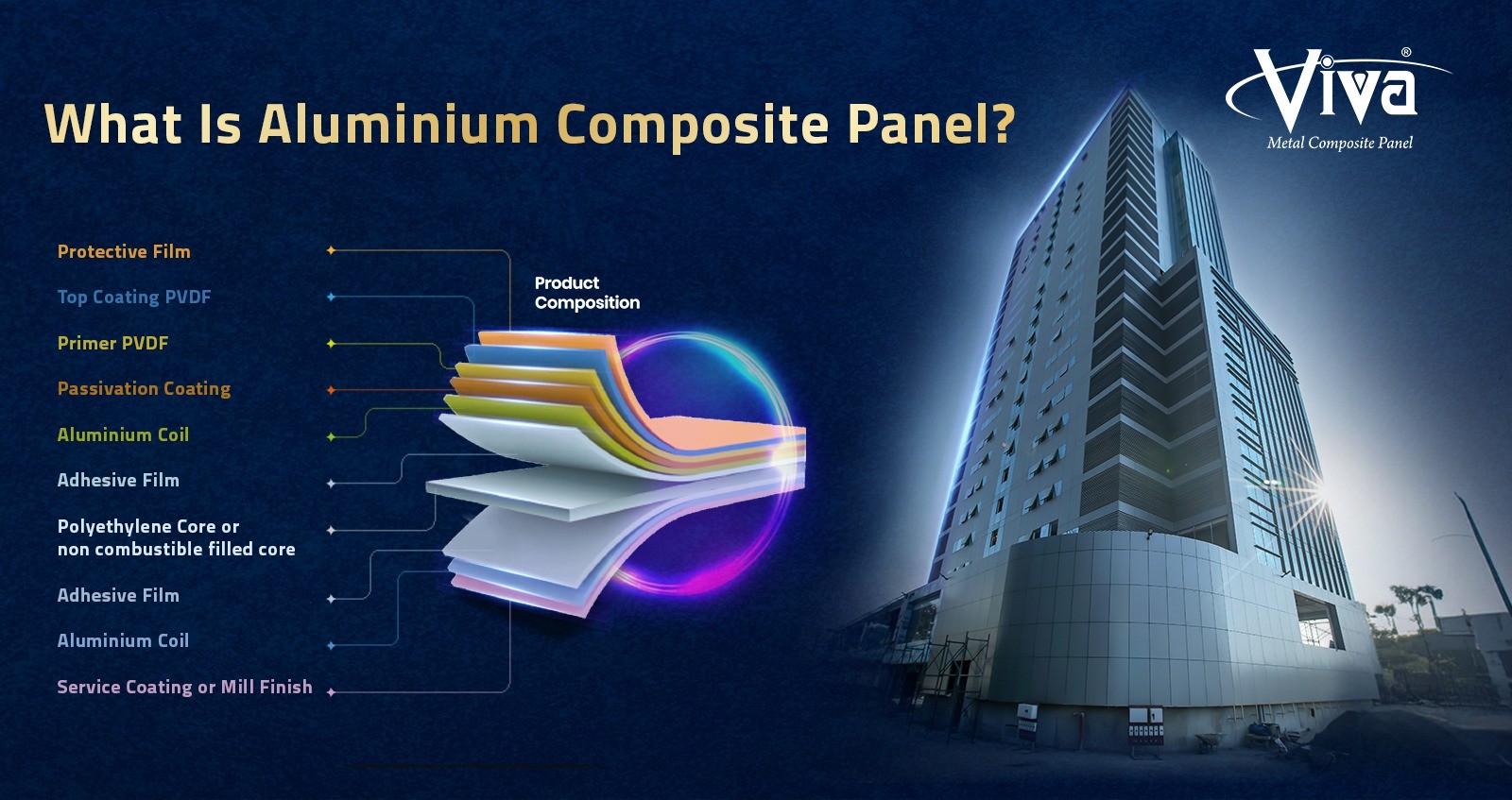
An Aluminium Composite Panel (ACP) is a flat panel made of two thin aluminium sheets bonded to a non-aluminium core. It is primarily used for exterior cladding, interior decoration, signage, and architectural facade s.
In simple words:
It combines the strength of aluminium with the flexibility of engineered core material — resulting in a lightweight, durable, and visually stunning building solution.
Composition of ACP Sheets
Understanding ACP composition helps architects and contractors select the right specification.
An ACP sheet typically consists of:
1. Top Aluminium Skin – Coated for durability and aesthetics (PVDF or PE coating).
2. Core Material – Either polyethylene (PE) or fire-retardant mineral-filled core.
3. Bottom Aluminium Skin – Adds structural balance and strength.
4. Protective Film – Prevents scratches during installation.
This sandwich structure makes ACP strong yet lightweight - a major advantage over solid aluminium sheets.
Types of ACP Core: Standard vs Fire-Retardant ACP
1. PE Core ACP
● Made with polyethylene core
● Ideal for interior applications
● Cost-effective
● Lightweight and easy to fabricate
2. Fire-Retardant ACP
● Mineral-filled core
● Slows flame spread
● Suitable for high-rise buildings
● Complies with fire safety norms
For commercial towers, malls, hospitals, airports, and metro projects - fire-retardant ACP is strongly recommended.
In today’s safety-conscious construction environment, fire performance is not optional - it’s essential.
PVDF vs PE Coating: Which One Should You Choose?
One of the most critical decisions in selecting an Aluminium Composite Panel is choosing the right coating.
PVDF Coating
● Ideal for exterior applications
● Excellent UV resistance
● Superior weather durability
● Retains color for years
● Withstands harsh Indian climate
PE Coating
● Used for interior spaces
● Smooth, glossy finish
● Economical option
For exterior wall cladding in Indian cities like Mumbai, Chennai, Delhi, or Ahmedabad - where heat, humidity, and pollution are extreme - PVDF-coated ACP sheets are the safest investment.
Why Aluminium Composite Panels Are So Popular
Let’s look at the key advantages of ACP sheets.
1. Lightweight Yet Strong
ACP weighs significantly less than solid aluminium or stone cladding.
This reduces structural load and simplifies installation.
2. Exceptional Durability
High-quality ACP sheets resist:
● UV rays
● Moisture
● Corrosion
● Pollution
● Temperature fluctuations
This makes them ideal for Indian weather conditions.
3. Design Flexibility
ACP can be:
● Bent
● Cut
● Routed
● Folded
● CNC processed
Architects love ACP because it enables bold facade designs without compromising stability.
4. Aesthetic Variety
Modern ACP panels come in:
● Solid shades
● Metallic finishes
● Marble textures
● Wooden patterns
● Mirror & brushed effects
They allow designers to experiment freely.
5. Easy Maintenance
Unlike stone or glass facade s, ACP surfaces are easy to clean and maintain.
A simple wash keeps them looking new for years.
Applications of Aluminium Composite Panels
ACP is widely used in:
Exterior Applications
● Commercial building facade s
● Corporate offices
● Shopping malls
● Airports & metro stations
● Petrol pumps
● Educational institutions
● Residential towers
Interior Applications
● False ceilings
● Column covers
● Partitions
● Reception areas
● Lift lobbies
● Retail interiors
Signage & Branding
● Hoardings
● Display boards
● Corporate branding panels
Because of its smooth surface and durability, ACP has become one of the most versatile facade materials in modern architecture.
ACP vs Other Exterior Cladding Materials
| Parameter | ACP | Stone Cladding | Glass |
|---|---|---|---|
| Weight | Lightweight | Heavy | Moderate |
| Cost | Cost-effective | Expensive | Expensive |
| Installation | Easy | Complex | Technical |
| Maintenance | Low | Moderate | High |
| Design Flexibility | High | Limited | Moderate |
For developers balancing aesthetics, performance, and budget - ACP often becomes the practical choice.
Is ACP Suitable for Indian Climate?
Absolutely.
India experiences:
● High humidity (coastal areas)
● Extreme heat (Rajasthan, Gujarat)
● Pollution (metro cities)
● Heavy rainfall (monsoon regions)
Premium-quality ACP with PVDF coating offers:
● Color stability
● Weather resistance
● Corrosion protection
● Long-term structural performance
This makes it highly suitable for Indian building conditions.
Green Building & Sustainability Benefits
Today’s projects demand sustainable materials.
ACP contributes to green building goals by:
● Being recyclable
● Reducing structural load
● Improving thermal insulation (when combined with insulation systems)
● Enhancing energy efficiency
For LEED and IGBC-compliant projects, ACP can support sustainable facade design strategies.
Buying Guide: How to Choose the Right Aluminium Composite Panel
Before purchasing ACP sheets, consider these factors:
1. Application Type
Exterior or interior? Choose PVDF for exterior.
2. Core Type
Standard PE or fire-retardant ACP?
3. Thickness
Common thickness options:
● 3mm
● 4mm
● 6mm
Exterior facade s usually require 4mm with 0.5mm aluminium skin.
4. Brand Reputation
Choose a trusted manufacturer with:
● Quality certifications
● Testing reports
● Strong dealer network
● Proven project portfolio
5. Warranty
A credible brand will offer long-term coating warranty.
Never compromise on quality to save a small upfront cost - facade failures are expensive to fix.
Common Mistakes to Avoid
1. Choosing interior-grade ACP for exterior use
2. Ignoring fire safety regulations
3. Not checking aluminium skin thickness
4. Buying from unverified suppliers
5. Overlooking installation expertise
ACP performance depends on both product quality and proper installation.
Final Thoughts: Why Aluminium Composite Panel Is the Smart Choice
The construction industry is evolving.
● Architects want creative freedom.
● Developers demand cost-efficiency.
● Builders require durability.
● And regulators insist on safety.
Aluminium Composite Panel brings all of these together.
When chosen wisely - with the right coating, thickness, and fire rating - ACP becomes more than just a facade material. It becomes a long-term architectural investment.
FAQs About Aluminium Composite Panel
1. What is the standard thickness of Aluminium Composite Panel?
Most exterior ACP sheets are 4mm thick with 0.5mm aluminium skin. Interior panels may be 3mm.
2. Is fire-retardant ACP mandatory?
For high-rise buildings and commercial projects, fire-retardant ACP is strongly recommended as per safety norms.
3. How long does ACP last?
High-quality PVDF-coated ACP can last 15–20 years or more with proper maintenance.
4. Can ACP be used for interiors?
Yes. PE-coated ACP sheets are widely used for ceilings, partitions, and decorative interiors.
5. Is ACP waterproof?
ACP panels are water-resistant and perform well in high-humidity conditions when properly installed.
POPULAR POSTS
CATEGORIES
- Aluminium Compsoite panel 52
- ACP Sheet 170
- ACP Facade 9
- Copper Aluminium Sheet 1
- Fire Safety For Buildings 3
- ACP Cladding 14
- Colour Coated Aluminium Coil 2
- Aluminium Corrugated Composite Panel 1
- Facades 7
- Aluminium Honeycomb Panel 6
- Fire Retardant 8
- Zinc Composite Panel 4
- Corten Steel Series 1
- Metal Abstract Series 3
- Wooden ACP Sheet 1
- HPL Sheet 3
- Viva ACP Colour Coating 1
- Wall Cladding 2
- Applications of ACP Panel 1
- Viva ACP 14
- ACP Sheets for Architectural Projects 3
- PVDF vs Polyester 3
- ACP Sheets For Showroom 1
- Viva ACP on International Market 1
- Viva royal club app 1
- ACP Sheets for Branding Corporates 1
- Shades of Santa Fe 1
- Al Zinc Series 1
- ACP Sheet Sizes and Thicknesses 1
- Louvers and Baffles 1
- Sustainable Facades 1