



 en
en
 Spanish
 Arabic
 Swahili
 French


Introduction
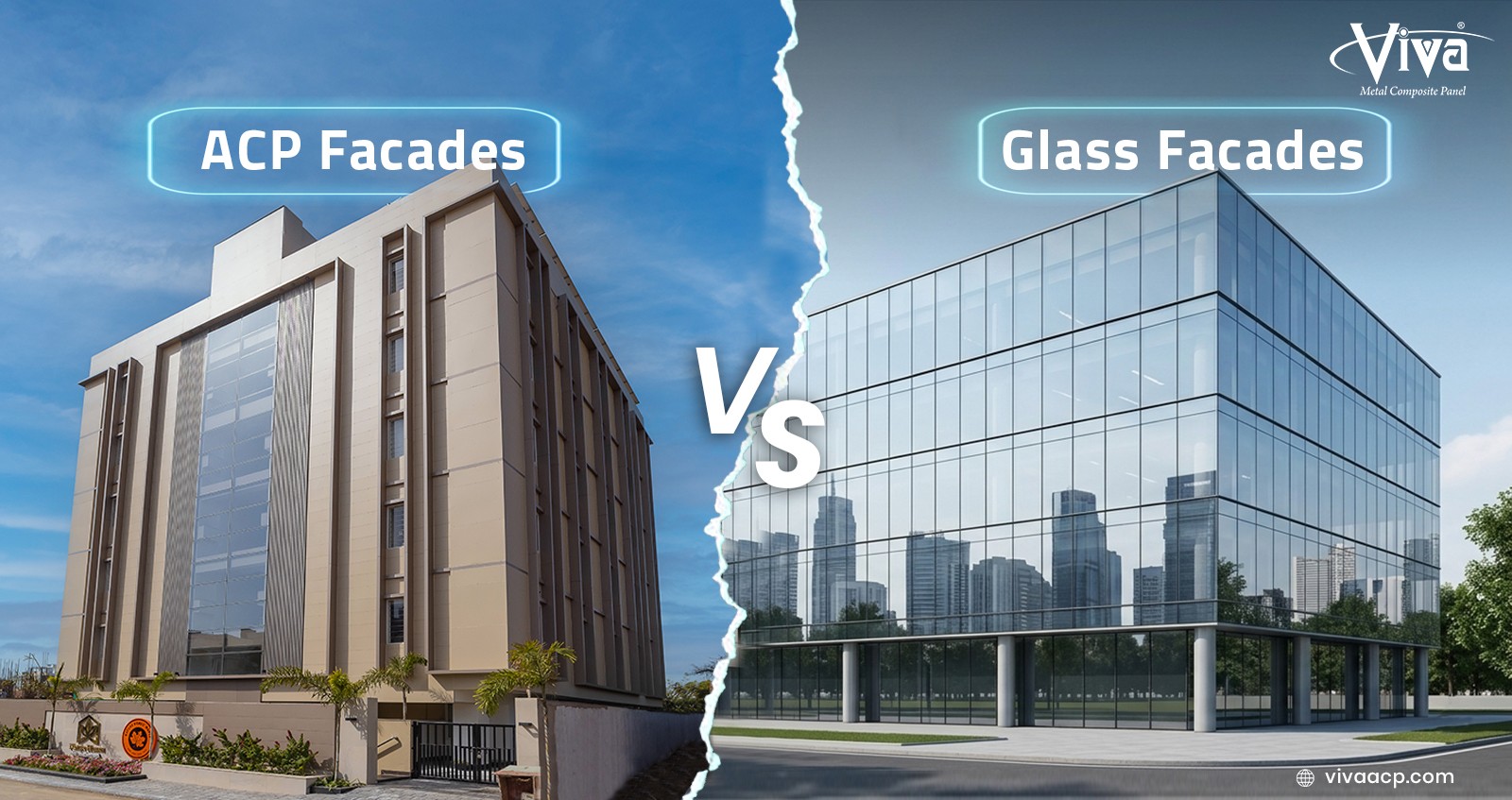
Choosing the right facade material is one of the most consequential decisions in any building project. The facade is the building's first impression — it determines aesthetics, energy performance, safety, and long-term cost of ownership. Two of the most popular facade options today are ACP (Aluminium Composite Panels) and glass curtain walls. Both have their merits, but which one is right for your project?
In this comprehensive comparison, Viva ACP breaks down the key differences between ACP and glass facades across all major parameters to help you make an informed decision.
Overview: ACP Facades vs Glass Facades
ACP facades consist of aluminium composite panels fixed to an aluminium sub-frame. They offer an opaque, solid exterior with a wide range of colour and texture options. Glass facades, on the other hand, use large panes of glass — often double or triple-glazed — to create a transparent or semi-transparent exterior.
Both systems have evolved significantly over the years. Modern ACP panels can mimic the look of glass, metal, or stone, while advanced glass systems can incorporate colours and patterns through fritting or interlayers. The choice ultimately comes down to the project's priorities.
1. Cost Comparison
Cost is often the most immediate concern for developers and contractors. ACP facades are significantly more economical than glass curtain walls. The material cost, fabrication cost, and installation cost are all lower for ACP.
• ACP facade installation: approximately Rs. 800–1,500 per sq ft (supply and install)
• Glass curtain wall: approximately Rs. 2,500–6,000 per sq ft depending on glass specification
• ACP can reduce facade costs by 40–60% compared to glass
In addition, the structural requirements for glass facades are more demanding — requiring heavier sub-frames, deeper fixing systems, and more complex engineering — all of which add to the overall project cost.
2. Aesthetics and Design Flexibility
Both ACP and glass can produce stunning buildings, but they offer very different aesthetic expressions.
ACP Facades
ACP panels offer complete creative freedom in terms of colour, texture, pattern, and form. From metallic finishes to wood-effect panels, stone textures to custom RAL colours — ACP can achieve virtually any look. Panels can be shaped, bent, and routed to create complex three-dimensional facades.
Glass Facades
Glass facades offer a transparent, reflective aesthetic that is associated with corporate prestige and modernity. They allow natural light to flood the interior and create a visual connection between inside and outside. However, their design flexibility is more limited compared to ACP, and customisation options are fewer.
3. Thermal and Energy Performance
In India's predominantly hot and tropical climate, thermal performance of the facade plays a crucial role in building energy efficiency. This is where ACP and glass diverge significantly.
Glass facades, even double-glazed, transmit significant solar heat into the building — increasing cooling loads and energy consumption. Without high-performance solar control glass (which is expensive), a glass facade can make a building uncomfortably hot. ACP facades, being opaque, block solar heat gain effectively and can be combined with insulation layers to further enhance thermal performance.
• ACP facades reduce solar heat gain by up to 70% compared to single-glazed glass
• Double-glazed glass with solar control coating can significantly improve performance but at high cost
• ACP is naturally better suited for energy-efficient building design in hot climates
4. Comprehensive Comparison Table
Parameter ACP Facade Glass Facade
Material Cost Low–Moderate High–Very High
Installation Cost Moderate High
Thermal Performance Excellent (opaque) Moderate (needs solar coating)
Design Flexibility Very High Moderate
Transparency None (opaque) Full to partial
Weight (kg/m²) 5–6 25–35
Maintenance Low High (cleaning essential)
Fire Safety FR/A2 available Naturally non-combustible
Sound Insulation Moderate–Good Moderate (double-glazed)
Lifespan 20–30 years 25–40 years
Repair/Replacement Easy and cheap Complex and expensive
Sustainability Recyclable Recyclable
5. Maintenance and Durability
Maintenance of a building facade is a recurring cost that is often underestimated at the design stage. ACP facades are relatively low-maintenance. Dirt and pollutants can be removed with a simple wash, and the PVDF coating ensures the panels retain their colour and gloss for decades.
Glass facades, while prestigious, demand regular professional cleaning — especially in polluted urban environments. Smudges, bird droppings, dust, and water stains are constantly visible on glass, making frequent maintenance both necessary and costly. In high-rise buildings, this requires specialised rope access or cradle systems, adding significant recurring expenses.
6. Structural and Safety Considerations
Glass is heavy and requires a robust structural system to support the weight. In seismically active regions or high-wind zones, glass facade systems require careful engineering. There is also the risk of glass breakage — whether from impact, thermal stress, or structural movement — which poses safety risks and replacement challenges.
ACP panels are lightweight, reducing the structural load on the building. While ACP itself is not shatter-proof, there is no risk of large glass shards causing injury in the event of damage. FR and A2 core ACP panels also provide superior fire safety compared to standard glass.
7. When to Choose ACP and When to Choose Glass
Choose ACP Facades When:
• Budget is a key constraint
• The project is in a hot climate where solar heat gain must be minimised
• High design flexibility with custom colours and textures is required
• Low maintenance and long-term value are priorities
• The building is a retail, industrial, institutional, or residential project
Choose Glass Facades When:
• Transparency and views are a design priority (luxury hotels, corporate headquarters)
• A premium, high-gloss aesthetic is required for brand image
• The building has high-quality HVAC systems to offset thermal loads
• Budget allows for the higher upfront and ongoing maintenance cost
The Best of Both Worlds: Hybrid Facades
Many architects today opt for hybrid facade systems that combine ACP panels and glass. Glazed sections allow natural light and views, while ACP panels provide thermal protection, aesthetic variety, and cost savings on solid wall areas. This approach delivers the prestige of glass where it matters most, with the practicality and economy of ACP everywhere else.
At Viva ACP, we work with architects and builders to design integrated facade solutions that maximise value, performance, and aesthetics.
Frequently Asked Questions (FAQs)
Q1. Is ACP a good substitute for glass on building facades?
ACP is an excellent alternative to glass for opaque facade areas. It offers better thermal performance, lower cost, greater design flexibility, and easier maintenance. However, if transparency or natural daylighting is required, glass remains necessary in those zones.
Q2. Which is more durable — ACP or glass?
Both materials are durable when properly installed and maintained. PVDF-coated ACP can retain its appearance for 20–25 years with minimal maintenance. High-quality glass facades can last 30–40 years, but require more regular cleaning and are vulnerable to cracking or thermal stress.
Q3. Can ACP look like glass or mirror?
Yes! Viva ACP offers mirror-finish and metallic ACP panels that create a reflective, glass-like appearance on building facades without the weight, cost, or maintenance requirements of actual glass.
Q4. What is a hybrid facade?
A hybrid facade combines both ACP panels and glass in a single facade system. Glass is used for windows, vision panels, or feature areas to allow light and views, while ACP covers the opaque wall surfaces. This approach balances aesthetics, performance, and cost effectively.
Q5. How can I get a quote for ACP panels for my project?
Visit vivaacp.com and contact our team with your project details — including dimensions, building type, and finish preferences. Our experts will provide a detailed quote and help you choose the best ACP solution for your project.
POPULAR POSTS
CATEGORIES
- Aluminium Compsoite panel 52
- ACP Sheet 170
- ACP Facade 9
- Copper Aluminium Sheet 1
- Fire Safety For Buildings 3
- ACP Cladding 14
- Colour Coated Aluminium Coil 2
- Aluminium Corrugated Composite Panel 1
- Facades 7
- Aluminium Honeycomb Panel 6
- Fire Retardant 8
- Zinc Composite Panel 4
- Corten Steel Series 1
- Metal Abstract Series 3
- Wooden ACP Sheet 1
- HPL Sheet 3
- Viva ACP Colour Coating 1
- Wall Cladding 2
- Applications of ACP Panel 1
- Viva ACP 14
- ACP Sheets for Architectural Projects 3
- PVDF vs Polyester 3
- ACP Sheets For Showroom 1
- Viva ACP on International Market 1
- Viva royal club app 1
- ACP Sheets for Branding Corporates 1
- Shades of Santa Fe 1
- Al Zinc Series 1
- ACP Sheet Sizes and Thicknesses 1
- Louvers and Baffles 1
- Sustainable Facades 1