



 en
en
 Spanish
 Arabic
 Swahili
 French


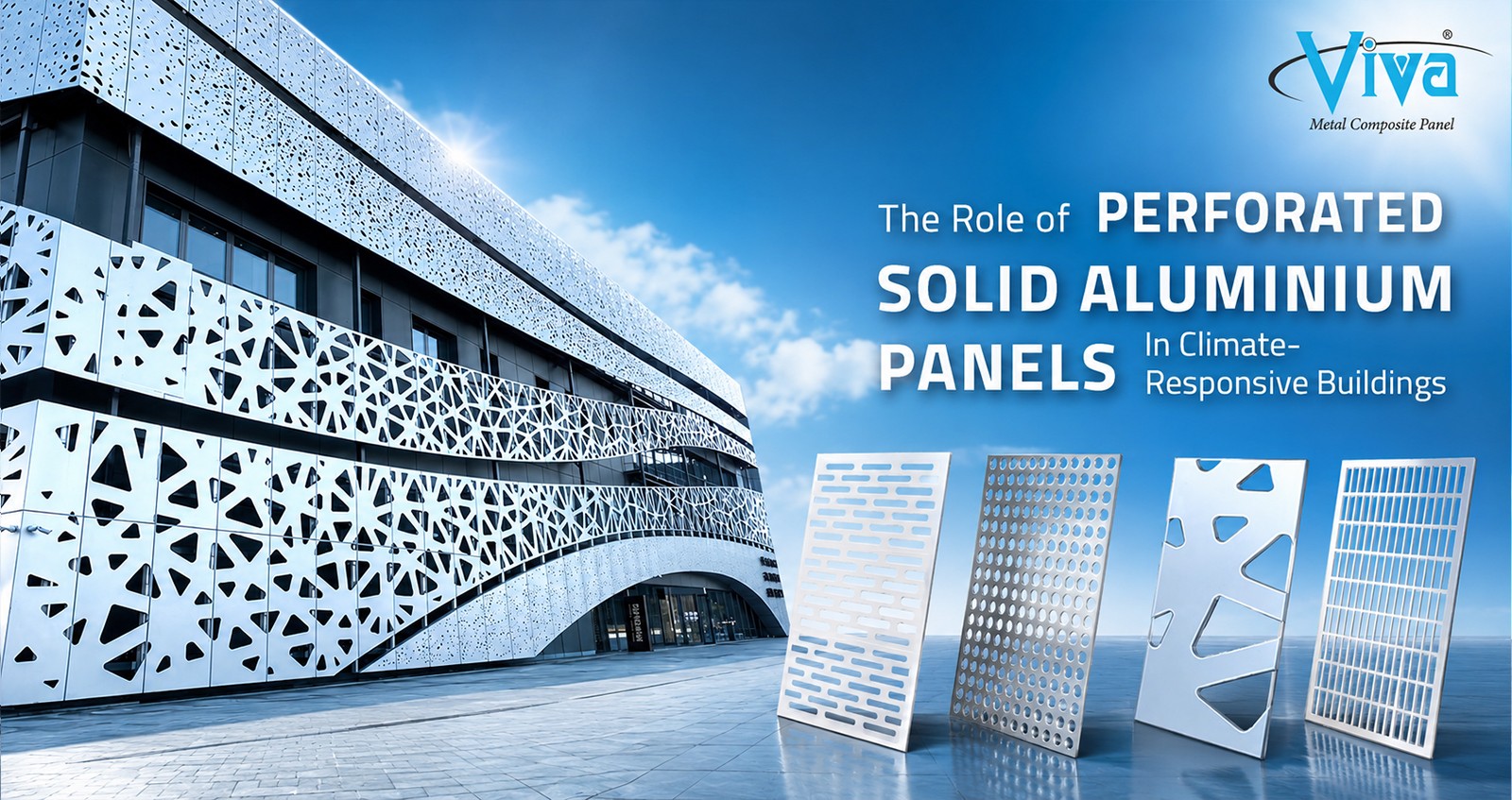
As global temperatures rise and energy costs continue to climb, the buildings that will define the next generation of architecture are those that work with climate rather than against it. One material sits at the intersection of performance and design in this movement: perforated solid aluminium panels. Far from being a decorative afterthought, perforated aluminium facades are now a serious engineering tool - shaping how light enters a building, how air moves through it, and how much energy it consumes over its lifetime.
Understanding Climate-Responsive Facade Design
Climate-responsive design is the practice of shaping a building's envelope so it responds intelligently to its environment - reducing the need for mechanical heating, cooling, and artificial lighting. In tropical and subtropical regions like most of India, the primary challenges are excessive solar heat gain, glare, and the need to balance natural ventilation with privacy and weather protection. A well-designed perforated facade addresses all three simultaneously, which is why leading architects are integrating it into projects from corporate campuses to educational institutions and government buildings.
Solar Shading: Blocking Heat Without Blocking Light
The most immediate climate benefit of a perforated aluminium panel facade is solar shading. By placing a perforated screen over glazed or solid facades, architects create a secondary skin that intercepts direct solar radiation before it reaches the interior surface. This is especially effective on west and east-facing elevations, where low-angle sunlight is hardest to manage with conventional shading devices.
The engineering behind this is precise - perforation ratios (the ratio of open area to total panel area) can be tuned from as low as 15% to as high as 60% depending on the desired balance between shading and transparency. A perforation ratio of around 25-30% is typically used on solar-critical facades to reduce solar heat gain by a substantial margin while still admitting soft, diffused daylight.
Key solar shading benefits of perforated aluminium panels include:
• Direct reduction in cooling loads, typically measured in kWh savings per square metre per year
• Protection of interior finishes, furniture, and display materials from UV degradation
• Reduction of glare without the need for internal blinds or solar control glazing
• Creation of pleasant, even illumination levels in large open-plan spaces
Natural Ventilation and Breathable Facades
In hot-humid climates, the ability to allow air movement through the facade is as important as blocking heat. Perforated panels act as permeable screens - they allow wind-driven ventilation while reducing wind pressure and providing weather protection. In buildings designed with a double-skin or ventilated facade strategy, the air cavity between the perforated outer screen and the primary wall enables a stack effect: hot air rises and exits at the top, drawing cooler air in at lower levels.
This passive ventilation strategy can significantly reduce reliance on mechanical HVAC in moderate seasons. It also means the facade is doing active environmental work rather than being a passive barrier. For residential buildings, educational campuses, and mixed-use developments in India's coastal cities, this can translate to months each year of reduced air conditioning dependency.
Daylight Control and Visual Comfort
Perforated aluminium panels are one of the few facade elements that allow architects to modulate daylight quality at the envelope level rather than relying entirely on interior solutions. By varying the size, shape, and density of perforations across different zones of a facade, the daylight distribution within a space can be carefully tuned:
• Higher perforation density at the top of a facade panel brings more light deep into the floor plan
• Lower perforation density at eye level reduces glare in seated work zones
• Gradient perforation patterns create a smooth transition from bright perimeter zones to the building interior
• Custom geometric patterns can become a distinctive architectural expression while serving a functional purpose
This ability to integrate aesthetics and performance in a single facade element is one of the primary reasons perforated solid aluminium panels are chosen over louvres, brise-soleil, or fixed overhangs on contemporary buildings.
Energy Efficiency and Building Performance
The energy efficiency contribution of a perforated aluminium facade is not limited to solar gain reduction. The material itself - solid aluminium - has excellent durability with no maintenance energy cost and a long service life of 30-plus years. When combined with a rainscreen sub-frame system, the ventilated air gap further improves the thermal performance of the wall assembly by preventing heat build-up at the primary wall surface.
For projects pursuing green building ratings such as LEED, IGBC, or GRIHA, a well-documented perforated aluminium facade can contribute to:
• Energy optimisation credits (by demonstrating reduced HVAC loads through simulation)
• Innovative design credits for integrated passive design strategies
• Materials and resources credits through the use of recyclable aluminium
Contemporary Architectural Applications in India and Beyond
The architectural applications of perforated solid aluminium panels in climate-responsive design are expanding rapidly across building typologies:
• Corporate campuses: Screen facades on IT parks and office buildings in cities like Bengaluru, Hyderabad, and Pune, where west-facing solar loads are a major comfort challenge
• Educational institutions: Naturally ventilated classroom blocks and library facades that balance daylight with thermal comfort
• Healthcare facilities: Hospital facades where infection control requirements limit operable windows, making passive solar management critical
• Cultural and civic buildings: Museums, government offices, and performance venues where a distinctive architectural expression is required alongside energy performance
• Residential towers: Perforated balustrade and balcony screens that provide privacy, solar protection, and visual identity
Performance Summary: Perforated Aluminium Panel Climate Benefits
Benefit How Perforated Aluminium Delivers It
Solar Shading Intercepts direct radiation before it reaches primary wall or glazing
Natural Ventilation Permeable screen allows air movement while reducing wind pressure
Daylight Control Perforation ratio and pattern tune light quality across floor plan
Energy Efficiency Reduced cooling loads, ventilated air cavity improves thermal performance
Acoustic Attenuation Perforated face with cavity backing reduces external noise penetration
Architectural Expression CNC patterns create unique visual identity alongside functional performance
Frequently Asked Questions
1. What is the ideal perforation ratio for a solar shading facade in a hot climate like India?
For facades in India's tropical and semi-arid zones, a perforation ratio of 20-35% is generally effective for solar shading while still allowing useful daylight and ventilation. The precise ratio should be determined through energy simulation based on orientation, floor depth, and occupancy type.
2. Can perforated solid aluminium panels be used for interior applications as well?
Yes. Perforated aluminium panels are widely used for interior partition walls, ceiling panels, corridor screens, and feature walls. Indoors, the performance benefits include acoustic absorption (especially with a backing material), visual privacy, and decorative patterning.
3. How are perforated aluminium panels maintained in dusty or coastal environments?
Solid aluminium panels with PVDF coating are highly resistant to dust adhesion, salt corrosion, and pollutant staining. Routine maintenance typically involves periodic washing with mild detergent and water. Their low maintenance requirement is one of the reasons they are preferred for large-scale public and infrastructure projects.
4. Can the perforation pattern be customised for architectural expression?
Yes. CNC perforation allows virtually any geometric pattern - from simple round holes to complex parametric arrays, arabesque patterns, or even pixelated images. Viva's Solid X range supports custom perforation designs for architects seeking a distinctive facade identity.
5. How does a perforated facade affect acoustic performance?
A perforated aluminium outer screen, particularly when backed by a mineral wool or acoustic mat in the facade cavity, can contribute meaningfully to external noise attenuation. This is especially relevant for buildings near busy roads, railways, or airports, where facade acoustic performance is a design requirement.
POPULAR POSTS
CATEGORIES
- Aluminium Compsoite panel 52
- ACP Sheet 170
- ACP Facade 9
- Copper Aluminium Sheet 1
- Fire Safety For Buildings 3
- ACP Cladding 14
- Colour Coated Aluminium Coil 2
- Aluminium Corrugated Composite Panel 1
- Facades 7
- Aluminium Honeycomb Panel 6
- Fire Retardant 8
- Zinc Composite Panel 4
- Corten Steel Series 1
- Metal Abstract Series 3
- Wooden ACP Sheet 1
- HPL Sheet 3
- Viva ACP Colour Coating 1
- Wall Cladding 2
- Applications of ACP Panel 1
- Viva ACP 14
- ACP Sheets for Architectural Projects 3
- PVDF vs Polyester 3
- ACP Sheets For Showroom 1
- Viva ACP on International Market 1
- Viva royal club app 1
- ACP Sheets for Branding Corporates 1
- Shades of Santa Fe 1
- Al Zinc Series 1
- ACP Sheet Sizes and Thicknesses 1
- Louvers and Baffles 1
- Sustainable Facades 1