



 en
en
 Spanish
 Arabic
 Swahili
 French


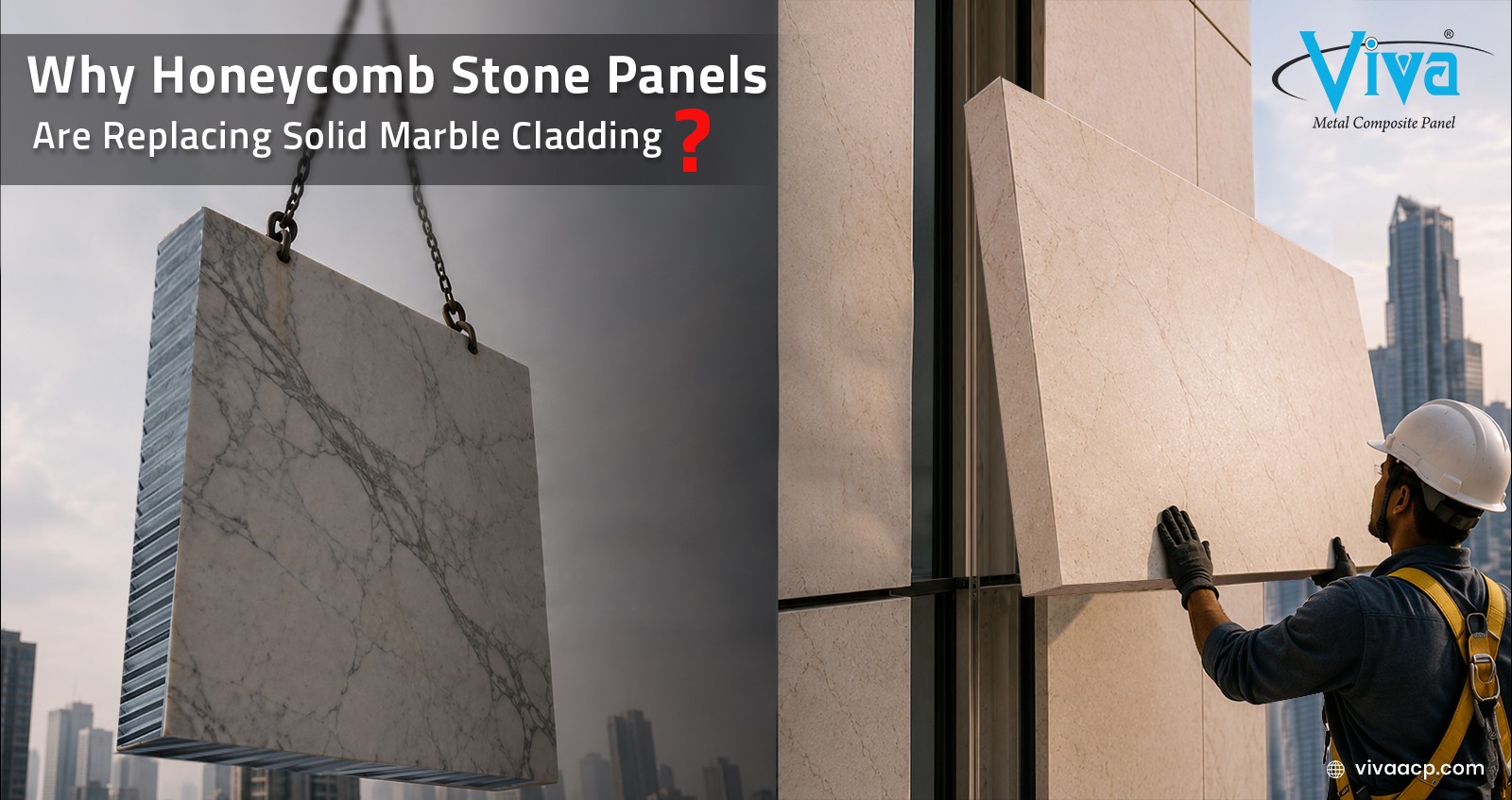
For decades, solid marble has been the symbol of luxury in architecture - from hotel lobbies and premium residential towers to iconic commercial facades. But as buildings grow taller, construction timelines tighter, and sustainability demands higher, architects and project developers are rethinking this choice. Honeycomb stone panels are fast emerging as the intelligent alternative that delivers the same visual grandeur of marble while solving every structural and practical challenge that solid stone cannot.
What Are Honeycomb Stone Panels?
A honeycomb stone panel is a composite facade material that bonds a thin slice of natural stone - typically marble, granite, or travertine - to an aluminium honeycomb core. The result is a panel that carries the authentic texture and finish of real stone but at a fraction of the weight and thickness of solid marble. This engineering breakthrough has fundamentally shifted how designers approach premium cladding on large-scale and high-rise projects.
The Weight Reduction Advantage
One of the most critical limitations of solid marble cladding is its sheer mass. Solid marble panels used in exterior cladding can weigh anywhere between 60 to 80 kg per square metre, placing enormous dead loads on structural frames, especially in high-rise buildings. Honeycomb stone panels, by contrast, typically weigh between 8 to 15 kg per square metre - a reduction of up to 80%.
This dramatic weight saving delivers cascading benefits throughout a project:
• Structural frame sizes can be reduced, directly cutting steel and concrete costs
• Foundation load calculations become significantly more manageable
• Upper floors no longer face the cumulative weight penalties that make solid marble prohibitive beyond a certain height
• Seismic performance improves because lighter facades exert lower forces during ground movement
For developers working on premium high-rise towers, the structural cost savings alone can more than offset the difference in material price.
Installation Efficiency on Large-Scale Projects
Solid marble requires skilled stonemasons, heavy lifting equipment, wet setting processes, and extended curing times. A project with several thousand square metres of marble cladding can face months of facade work with significant risk of cracking, lippage, and joint inconsistency.
Honeycomb stone panels are engineered for dry-fix installation systems - the same rainscreen and sub-frame methodology used for aluminium composite panels. Key installation advantages include:
• Panels can be pre-fabricated off-site and delivered ready to fix
• Single workers can handle and position panels that would require a crane and a team with solid stone
• Dry installation eliminates weather dependency caused by mortar and adhesive curing
• Remedial work and panel replacement in the event of damage is faster and less invasive
• Large-format panels achieve visually seamless facades with fewer joints
This efficiency is especially impactful for infrastructure and commercial projects where construction programme is a commercial priority.
Structural and Performance Benefits
Beyond weight, honeycomb panels offer structural properties that solid marble simply cannot match. The aluminium honeycomb core acts as an internal stiffener, giving the panel remarkable rigidity relative to its thickness. This means:
• Panels span larger distances between fixing points without flexing or cracking
• Thermal expansion and contraction cycles are absorbed more uniformly, reducing stress fractures
• Wind load resistance is significantly higher than an unsupported stone veneer of the same thickness
• The core provides a secondary barrier against moisture infiltration, protecting the stone face from back-side saturation
In coastal and high-wind environments - common for premium towers in cities like Mumbai, Chennai, and Dubai - this structural resilience is a decisive factor.
Sustainability and Environmental Credentials
Solid marble extraction is one of the most resource-intensive processes in the construction material supply chain. Each tonne of marketable marble generates several times its weight in quarry waste. Quarrying also causes irreversible landscape damage and consumes vast amounts of energy in cutting, transport, and finishing.
Honeycomb stone panels use only a thin laminate of natural stone - typically 3 to 6 mm - which means each cubic metre of quarried stone yields far more usable facade area. Combined with an aluminium honeycomb core that is recyclable at end of life, honeycomb panels represent a substantially lower embodied carbon solution. For projects pursuing LEED, IGBC, or GRIHA green building certification, the material selection can contribute meaningfully to resource efficiency and recycled content credits.
Applications in Premium and High-Rise Projects
Honeycomb stone panels are finding widespread adoption across several building typologies where solid marble was previously considered the only premium option:
• Luxury residential towers: Full-height marble-look facades without structural compromise on upper floors
• Five-star hotels: Grand lobbies, podium cladding, and column wraps that require the grandeur of natural stone with the practicality of a lightweight system
• Premium commercial office buildings: Stone-clad facades and entrance features where brand presence and longevity matter
• Airport and transport hubs: High-traffic public interiors where durability, maintainability, and aesthetics intersect
• High-end retail: Statement facades and feature walls for luxury retail brands
Comparison: Solid Marble vs Honeycomb Stone Panel
| Feature | Solid Marble Cladding | Honeycomb Stone Panel |
|---|---|---|
| Weight (kg/sq.m) | 60-80 | 8-15 |
| Installation Method | Wet-fix / skilled trades | Dry-fix / fast installation |
| Structural Load Impact | High | Low |
| Seismic Performance | Poor (heavy mass) | Good (lightweight) |
| Stone Material Usage | Full thickness (20-30mm) | Thin laminate (3-6mm) |
| End-of-Life Recyclability | Limited | Aluminium core recyclable |
| Risk of On-site Breakage | High | Low |
Frequently Asked Questions
1. Do honeycomb stone panels look like real stone?
Yes. Because the face material is an actual thin slice of natural stone - marble, granite, travertine, or limestone - the colour, veining, and texture are completely authentic. There is no visual compromise compared to solid marble when installed on a facade.
2. Can honeycomb stone panels be used outdoors in Indian weather conditions?
Absolutely. Honeycomb stone panels are designed for exterior use and perform well in India's diverse climatic zones - from the humid coastal environment of Mumbai and Chennai to the dry heat of Rajasthan and the monsoon belts. The aluminium honeycomb core resists moisture, and the panel assembly does not swell or delaminate under thermal cycling.
3. Are honeycomb stone panels more expensive than solid marble cladding?
The material cost of honeycomb panels may be comparable to or slightly higher than solid marble slabs, but the overall project cost is typically lower. The savings come from reduced structural frame costs, faster installation, lower crane and labour costs, and less risk of breakage on site.
4. What thickness of stone is used on the face of a honeycomb panel?
The stone laminate is typically between 3 mm and 6 mm thick. This thin section is made possible by the structural support provided by the aluminium honeycomb core, which prevents the stone from flexing or cracking under load.
5. Is the honeycomb panel system suitable for high-rise buildings above 30 floors?
Yes. In fact, high-rise buildings are one of the most compelling use cases for honeycomb stone panels. The cumulative weight savings become more significant with every additional floor, and the dry-fix installation system is well-suited to working at height. Structural engineers consistently favour lightweight facade systems for supertall buildings.
POPULAR POSTS
CATEGORIES
- Aluminium Compsoite panel 52
- ACP Sheet 170
- ACP Facade 9
- Copper Aluminium Sheet 1
- Fire Safety For Buildings 3
- ACP Cladding 14
- Colour Coated Aluminium Coil 2
- Aluminium Corrugated Composite Panel 1
- Facades 7
- Aluminium Honeycomb Panel 6
- Fire Retardant 8
- Zinc Composite Panel 4
- Corten Steel Series 1
- Metal Abstract Series 3
- Wooden ACP Sheet 1
- HPL Sheet 3
- Viva ACP Colour Coating 1
- Wall Cladding 2
- Applications of ACP Panel 1
- Viva ACP 14
- ACP Sheets for Architectural Projects 3
- PVDF vs Polyester 3
- ACP Sheets For Showroom 1
- Viva ACP on International Market 1
- Viva royal club app 1
- ACP Sheets for Branding Corporates 1
- Shades of Santa Fe 1
- Al Zinc Series 1
- ACP Sheet Sizes and Thicknesses 1
- Louvers and Baffles 1
- Sustainable Facades 1